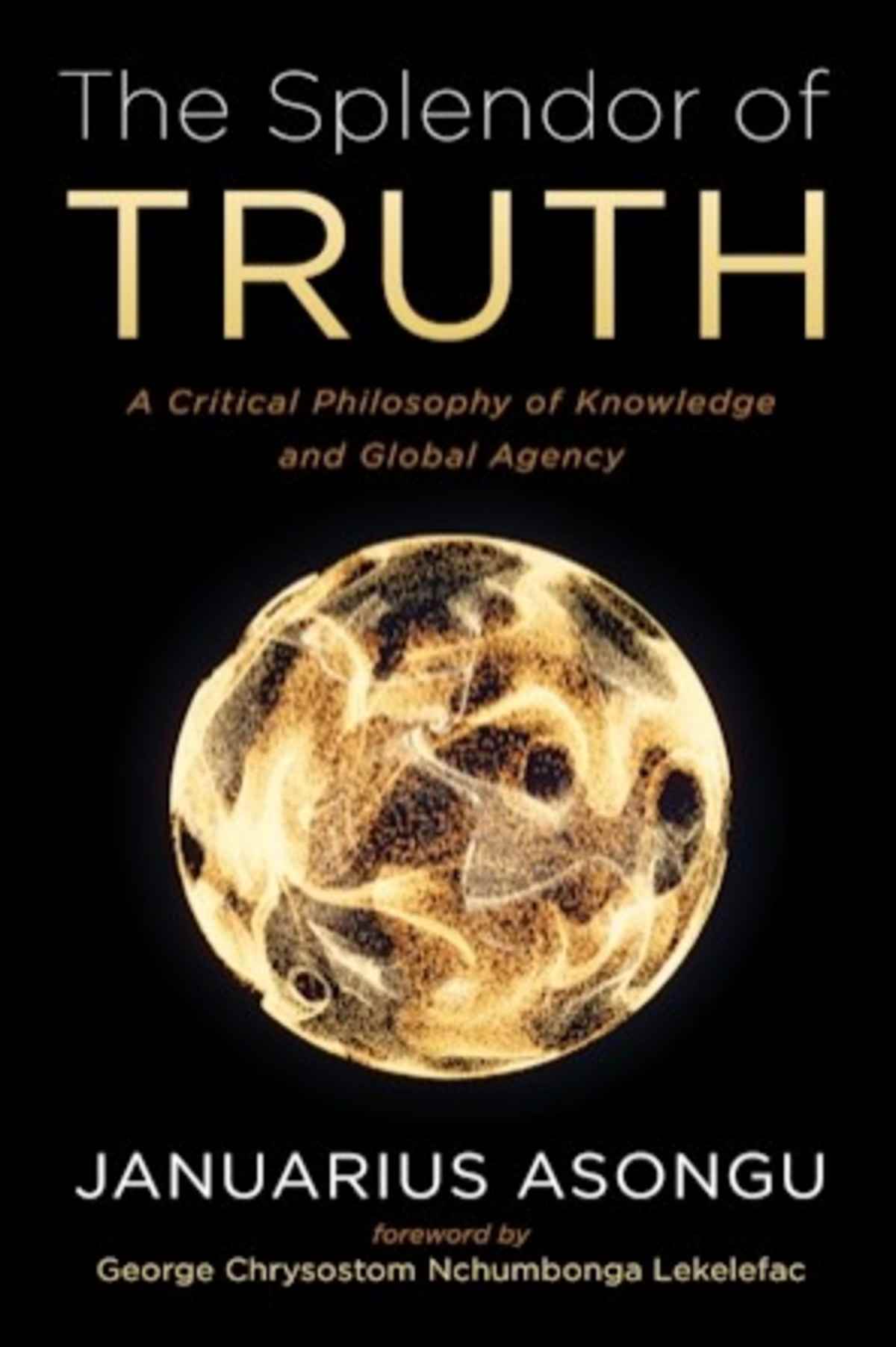
By Januarius Asongu, PhD, author of The Splendor of Truth
In recent years, I have increasingly noticed that the word synthetic is being used in two very different ways in contemporary discourse. On one hand, technologists speak about synthetic reality, referring to advanced AI-driven digital environments that simulate or augment the physical world. On the other hand, my philosophical framework, Critical Synthetic Realism (CSR), uses the term synthetic in a very different sense. Because the terminology overlaps, some readers have assumed that the two concepts are related. In reality, they belong to entirely different intellectual domains.
I was quick to notice this distinction precisely because my own work sits at the intersection of philosophy and technology. As both a philosopher concerned with epistemology and a technologist engaged with contemporary digital systems, I immediately recognized both the similarity in language and the profound difference in meaning.
What I Mean by Critical Synthetic Realism
Critical Synthetic Realism is a philosophical framework I developed to address what I describe as the epistemic fracture of modern knowledge. In the contemporary intellectual landscape, knowledge has become fragmented across disciplines and paradigms that often struggle to communicate with one another.
Empirical science excels at explaining physical processes but often leaves questions of meaning, ethics, and social order insufficiently addressed. Interpretive traditions illuminate culture and symbols but sometimes drift toward relativism. Critical theories reveal structures of power but may lack stable ontological foundations.
CSR emerged from my effort to build a framework capable of synthesizing these insights without collapsing into relativism or reductionism.
When I use the word synthetic in CSR, I do not mean artificial or simulated. Rather, I mean integrative. CSR is synthetic because it seeks to integrate multiple forms of knowledge—empirical, philosophical, psychological, institutional, and theological—into a coherent account of reality.
At the same time, CSR is critical because it recognizes that human knowledge is mediated by institutions, cultural frameworks, power structures, and cognitive limitations. Our understanding of the world is never completely neutral; it is shaped by historical and social contexts.
Yet CSR also affirms realism. Reality exists independently of our interpretations. While our knowledge is partial and fallible, the world itself is not merely a social construction.
In essence, Critical Synthetic Realism is a philosophy of knowledge and reality, not a technological project.
What Technologists Mean by Synthetic Reality
The concept of synthetic reality, by contrast, belongs to the domain of emerging digital technologies.
Synthetic reality refers to advanced AI-driven environments that simulate, augment, or even replace aspects of physical reality. These systems combine generative AI, machine learning, and advanced 3D modeling to produce photorealistic digital environments populated by interactive avatars, virtual objects, and intelligent agents.
Unlike earlier virtual reality systems that relied on pre-programmed environments, synthetic reality platforms can generate new environments dynamically. Machine learning systems can anticipate user behavior and tailor experiences in real time.
These technologies enable the creation of digital twins of real-world objects and environments, immersive training simulations, and interactive virtual worlds that respond intelligently to users. Applications range from entertainment and gaming to education, architecture, medical training, and urban planning.
In short, synthetic reality is an AI-powered technological ecosystem focused on immersive simulation.
The Fundamental Difference
Although both ideas use the word synthetic, they address entirely different questions.
Synthetic reality asks: How can technology simulate or recreate environments?
Critical Synthetic Realism asks: How do human beings understand reality in the first place?
One constructs digital environments; the other investigates the philosophical structure of knowledge and reality.
Interestingly, the rise of synthetic reality technologies may actually make philosophical frameworks like CSR even more important. As digital simulations become increasingly convincing, societies will face deeper questions about truth, perception, knowledge, and authority. Distinguishing between what is real, what is simulated, and how knowledge is mediated will become a major intellectual challenge.
CSR was developed precisely to address such epistemic complexities.
Conclusion
Despite the similarity in terminology, Critical Synthetic Realism and synthetic reality are fundamentally different concepts. CSR is a philosophical framework designed to integrate knowledge and defend a nuanced realism about the world. Synthetic reality is a technological development that uses artificial intelligence to create immersive digital simulations.
Recognizing this distinction helps prevent confusion and highlights a broader point: as our technological capacity to simulate reality grows, the need for rigorous philosophical reflection on knowledge and reality becomes even more urgent.