




Januarius Asongu
Reconstructing Knowledge, Human Flourishing, and Civilizational Renewal in the Twenty-First Century
Introduction
Januarius Jingwa (JJ) Asongu, PhD, is a philosopher, theologian, psychologist, educator, author, institutional leader, human rights advocate, and interdisciplinary scholar whose work seeks to address one of the central challenges of the modern world: the fragmentation of knowledge and its consequences for human flourishing, institutional integrity, and civilizational development. Across philosophy, theology, psychology, education, business, banking and finance, law, political science, technology, engineering, health sciences, public policy, human rights, and peace studies, Asongu has pursued a remarkably consistent intellectual project centered on truth, freedom, dignity, justice, and social transformation.
Unlike many contemporary scholars whose work remains confined to a single discipline, Asongu has sought to construct an integrated framework capable of connecting the sciences, humanities, professions, and public life. Through the development of Critical Synthetic Realism (CSR), the Critical Synthetic Realist Methodology (CSRM), Synthetic Theological Realism (STR), Critical-Liberative Theology (CLT), Critical Synthetic Counseling (CSC), Epistemic Fracture, Epistemic Sovereignty, and Liberative Realism, he has proposed an ambitious interdisciplinary vision designed to help individuals, institutions, and societies recover their capacity for truth-seeking, self-correction, and flourishing.
Beyond scholarship, Asongu's work encompasses institution building, human rights advocacy, peacebuilding, and public engagement. His intellectual project is therefore not confined to academic discourse but seeks practical application in governance, education, social transformation, conflict resolution, and the promotion of human dignity. Across diverse domains, he consistently argues that truth is not merely an abstract philosophical category but a precondition for personal flourishing, institutional legitimacy, and civilizational renewal.
Philosophy and the Development of Critical Synthetic Realism
Asongu's most significant intellectual contribution is the development of Critical Synthetic Realism (CSR), a comprehensive philosophical framework designed to overcome the fragmentation of contemporary thought. CSR affirms the reality of truth while acknowledging the provisional, historical, and fallible nature of human understanding. It seeks to preserve realism without dogmatism, critique without relativism, and interdisciplinary integration without reductionism.
Building upon classical realism while engaging modern and contemporary philosophy, CSR addresses questions of metaphysics, epistemology, ethics, personhood, institutions, culture, and human flourishing. Through major works such as The Splendor of Truth: A Critical Philosophy of Knowledge and Global Agency and Critical Synthetic Realism: A Systematic Philosophy of Truth, Personhood, and Human Flourishing, Asongu advances a robust defense of objective truth while emphasizing intellectual humility and continuous self-correction.
Building upon CSR, Asongu subsequently developed several related frameworks, including the Critical Synthetic Realist Methodology (CSRM), Synthetic Theological Realism (STR), Critical-Liberative Theology (CLT), Critical Synthetic Counseling (CSC), Epistemic Fracture, Epistemic Sovereignty, and Liberative Realism. Together, these constitute a comprehensive intellectual architecture designed to address questions of truth, knowledge, freedom, institutions, human flourishing, psychological healing, and social transformation. What distinguishes Asongu's work is not merely the creation of isolated concepts but the construction of an integrated system capable of engaging the sciences, humanities, professions, and public life within a common philosophical framework.
Theology and the Reconstruction of Christian Thought
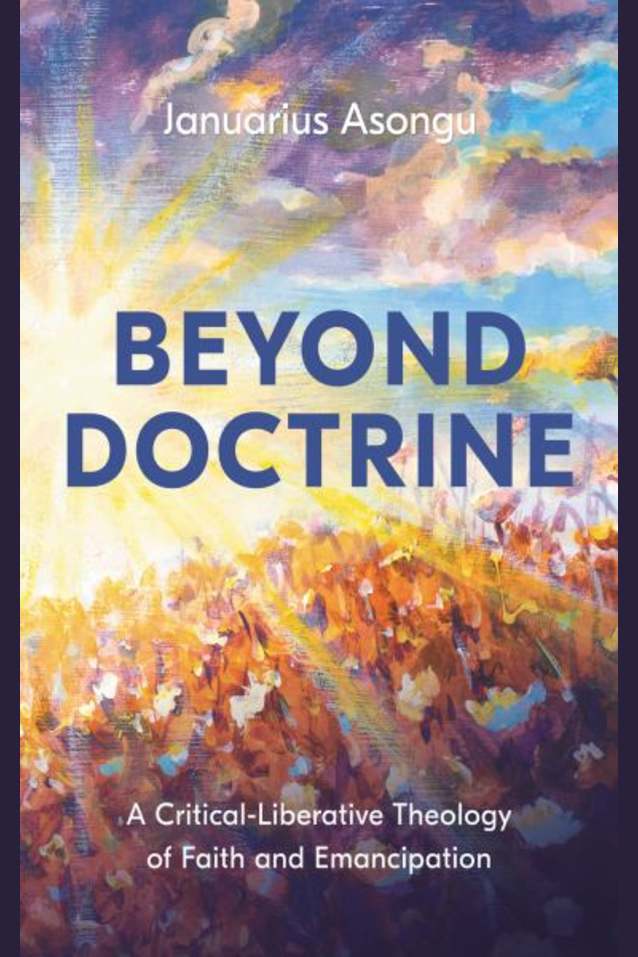
Building on CSR, Asongu developed Synthetic Theological Realism and Critical-Liberative Theology, frameworks that seek to preserve theological realism while engaging contemporary historical, political, and social concerns. His theological project emphasizes the integration of faith, reason, liberation, participation, and human flourishing.
Among his most original theological contributions is the reinterpretation of original sin through the concept of Epistemic Fracture. Rather than understanding sin exclusively as moral disobedience, Asongu highlights the distortion of human capacities for knowing, understanding, and acting truthfully. This insight has implications for theology, psychology, ethics, politics, and institutional life.
His work has also challenged and expanded traditional interpretations of the Imago Dei (Image of God). Rather than viewing the image of God as a static attribute, Asongu presents it as a dynamic reality expressed through humanity's capacities for truth-seeking, participation, creativity, responsibility, relationality, and flourishing. This reconstruction provides a more expansive theological anthropology capable of addressing contemporary questions of human dignity, equality, freedom, and social justice.
Consistent with these commitments, Asongu has advocated the equal dignity of women within both church and society. His theological writings argue that authentic liberation and flourishing require the removal of unnecessary barriers to women's participation in education, leadership, ministry, and public life.
Psychology and Counseling
Asongu's contributions to psychology emerge from his conviction that human beings cannot be adequately understood through reductionist models. Through works such as Unpacking the Mind, Holistic Resilience, and Hidden Selves, he proposes a multidimensional approach to mental health that integrates biological, psychological, social, moral, and spiritual realities.
His concepts of Triple Masking, Triple Trauma, and Holistic Resilience seek to explain how individuals navigate layers of personal, cultural, institutional, and historical pressures. Rather than treating psychological suffering merely as pathology, Asongu situates mental health within broader questions of identity, meaning, relationships, social structures, and human flourishing.
Central to this contribution is Critical Synthetic Counseling (CSC), a counseling framework derived from CSR and designed to integrate psychological science, philosophical realism, ethical reflection, spirituality, and social context. CSC seeks to move beyond fragmented therapeutic approaches by recognizing the interconnected nature of human existence across ontological, epistemic, structural, and axiological domains. It serves as the practical counseling application of Critical Synthetic Realism and reflects Asongu's broader commitment to holistic healing, restoration, and flourishing.
Education and Institution Building
Asongu has devoted significant effort to educational leadership and institution building. As Founder and Chancellor of Saint Monica University and Co-Founder of the American Institute of Technology, he has sought to expand access to quality higher education while emphasizing academic rigor, ethical leadership, interdisciplinary inquiry, and social responsibility.
His educational philosophy rejects the notion that universities exist merely to produce workers for the marketplace. Instead, he argues that higher education should cultivate critical thinkers, ethical leaders, responsible citizens, and lifelong learners. Through curriculum development, graduate supervision, faculty mentorship, and educational publications, he has contributed to the development of globally relevant educational programs rooted in both local realities and international standards.
Health Sciences, Nursing, Anatomy, and Public Health
Although widely recognized as a philosopher and theologian, Asongu has also contributed to health sciences through numerous collaborative works in nursing, anatomy, healthcare education, counseling, and public health. These contributions reflect his broader interdisciplinary commitment to holistic well-being.
Rather than viewing health solely through biomedical lenses, he advocates a comprehensive understanding that includes psychological, social, ethical, spiritual, and environmental dimensions. His work contributes to emerging conversations about whole-person care, resilience, health equity, and the integration of healthcare with broader questions of meaning and human flourishing.
Business, Banking, Finance, Leadership, and Corporate Responsibility
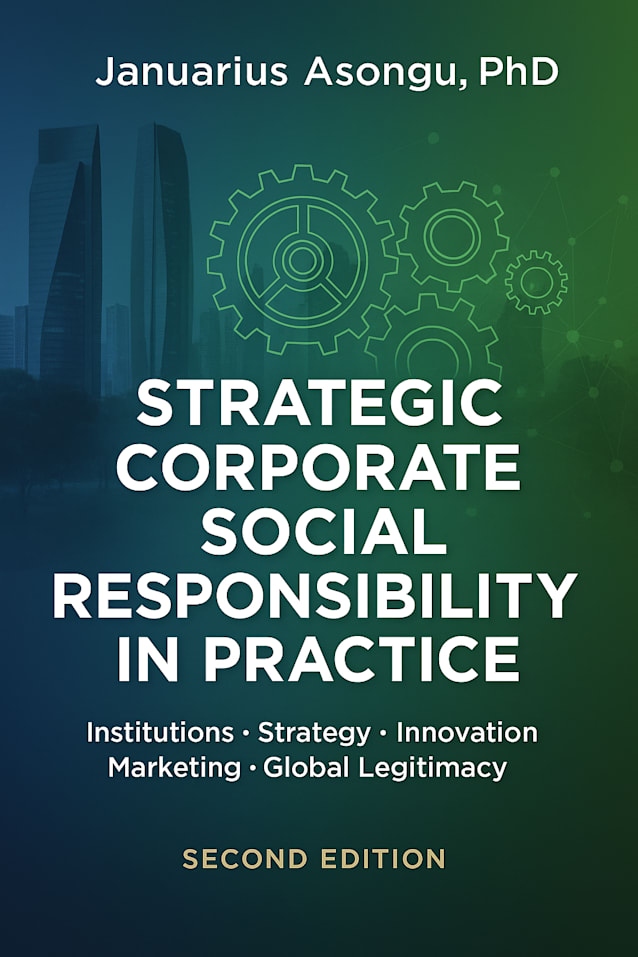
Asongu's contributions to business scholarship extend beyond corporate social responsibility into banking, finance, leadership, entrepreneurship, logistics, governance, and organizational development. Through works such as Strategic Corporate Social Responsibility in Practice, The Modern MBA, and his publications in banking and finance, he emphasizes the ethical foundations of markets and financial institutions.
His scholarship argues that economic systems function best when grounded in trust, accountability, transparency, and social responsibility. Rather than treating finance as merely a technical discipline, he situates economic activity within broader questions of human flourishing, institutional legitimacy, and social development.
His work consistently demonstrates that businesses are not merely economic entities but moral communities whose long-term success depends upon integrity, stakeholder engagement, ethical leadership, and responsible governance.
Technology, Engineering, Logistics, and Cybersecurity
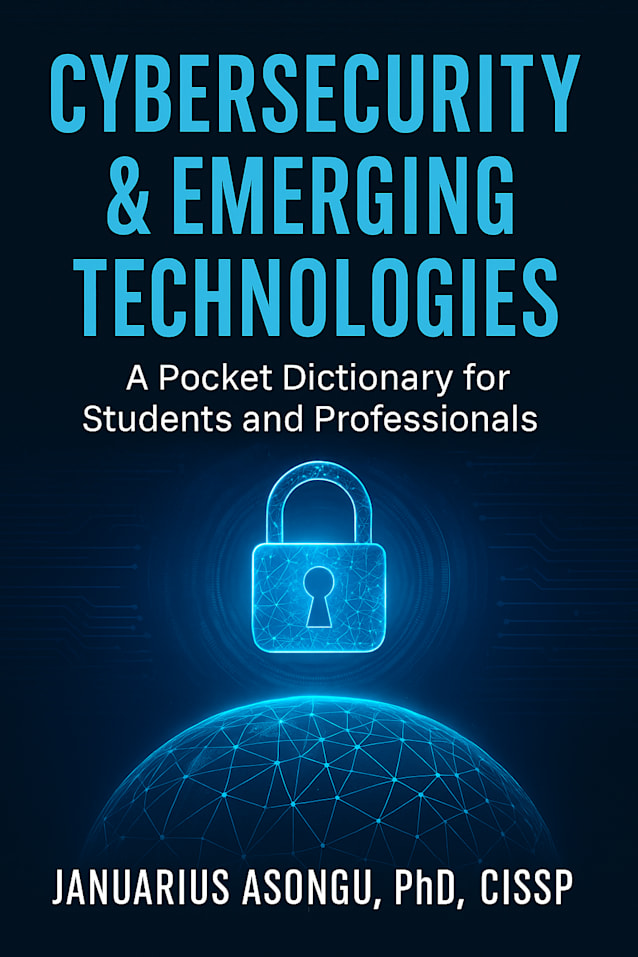
Asongu's scholarship extends beyond cybersecurity into engineering, logistics, supply chain management, technology governance, and emerging technologies. In addition to works such as Cybersecurity Governance, Risk, and Compliance, The Human Firewall, and Cybersecurity and Emerging Technologies, he has authored Industrial Engineering Essentials and Global Logistics and Supply Chain Management: Strategies, Operations, and Sustainability.
These works demonstrate his interest in the design, management, and optimization of complex systems. Whether addressing cybersecurity, logistics networks, engineering processes, or emerging technologies, Asongu emphasizes the importance of resilience, efficiency, sustainability, and ethical responsibility.
His interdisciplinary approach insists that technological innovation must be accompanied by governance structures capable of protecting human dignity, privacy, security, accountability, and social well-being. He argues that technology should remain a servant of human flourishing rather than becoming an end in itself.
Law, Political Science, and Constitutional Thought
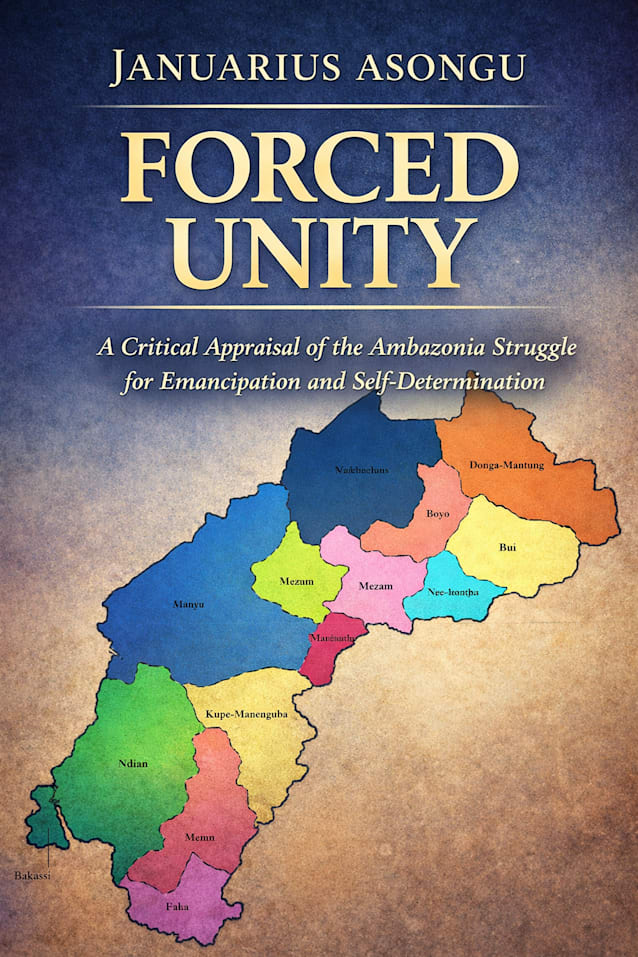
Asongu has emerged as an important voice in law, political science, constitutional theory, governance, and self-determination studies. His influential work Forced Unity: A Critical Appraisal of the Ambazonia Struggle for Emancipation and Self-Determination examines the legal, constitutional, historical, and political foundations of the conflict in the former British Southern Cameroons.
His scholarship explores self-determination, minority rights, constitutional legitimacy, federalism, institutional accountability, democratic participation, and the rule of law. He argues that political stability depends not merely on coercive power but on legitimacy, justice, consent, and the protection of human rights.
His legal and political thought consistently links freedom with responsibility and governance with truth, emphasizing that constitutional arrangements must reflect the historical realities, aspirations, and identities of the communities they seek to govern.
Human Rights, Activism, and Social Justice
Beyond academic scholarship, Asongu has consistently defended the rights of marginalized and underrepresented communities. His advocacy has included support for Ambazonian self-determination claims, defense of Bakweri land rights, advocacy for communities affected by land disputes in Adamawa, and attention to what he describes as "micro-minorities"—vulnerable populations whose concerns are often neglected even within larger minority movements.
His work emphasizes that justice requires not only protection for major populations but also attention to smaller and often invisible communities whose voices are excluded from political, legal, and economic decision-making processes.
Throughout his writings and public engagements, he has argued that authentic development must be grounded in human dignity, equality before the law, institutional accountability, and respect for fundamental rights.
Combating Harmful Witchcraft and Superstitious Beliefs
A distinctive dimension of Asongu’s human rights advocacy, developed in Encountering Witchcraft, is his fight against harmful witchcraft beliefs and accusations. Across parts of Africa, such accusations disproportionately target women, children, and the elderly, leading to torture, killings, and dispossession. Drawing on Critical Synthetic Realism, Asongu shows how distorted knowledge systems produce real material harm.
Notably, he observes that superstition persists even among the intelligentsia—university graduates and professionals who publicly affirm science yet privately attribute misfortune to supernatural malice. More critically, Asongu argues that evangelical Christians and prosperity gospel advocates often actively promote and intensify witchcraft beliefs. By framing poverty, illness, and failure as demonic attacks requiring deliverance, these preachers fuel accusations against vulnerable individuals, including relatives and neighbors. Rather than diminishing witchcraft fears, this theology reinforces them, creating a lucrative cycle of exorcisms and offerings.
Asongu advocates legal protections for accused persons, public education to dismantle supernatural harm narratives, and evidence-based dispute resolution. He insists that respecting cultural tradition does not require tolerating violence. His fight against witchcraft and superstition—elite and popular, evangelical and traditional—integrates philosophical truth-seeking with practical dignity, showing how epistemic reform saves lives.
Peacebuilding, International Relations, and Conflict Resolution
Asongu's scholarship and activism have consistently reflected a concern for peace, justice, reconciliation, and responsible international engagement. His work The Iraq Quagmire: The Price of Imperial Arrogance offers a critical examination of foreign intervention, geopolitical power, and the unintended consequences of military action. The book reflects broader themes present throughout his scholarship: the dangers of ideological certainty, the necessity of institutional accountability, and the importance of understanding historical and cultural realities before pursuing large-scale interventions.
Beyond scholarship, Asongu has actively participated in peacebuilding initiatives related to the conflict in the former British Southern Cameroons. As President of the Alliance for Peace and Justice in the former British Southern Cameroons, he has advocated nonviolent solutions, inclusive dialogue, constitutional justice, and human rights protections.
His international advocacy has included presenting aspects of the Ambazonian case before human rights forums in Geneva, Switzerland, contributing to international awareness of the conflict and its humanitarian implications. His peacebuilding efforts reflect a broader conviction that sustainable peace requires truth-telling, reconciliation, institutional legitimacy, and respect for human dignity.
History, Culture, Anthropology, and Indigenous Knowledge
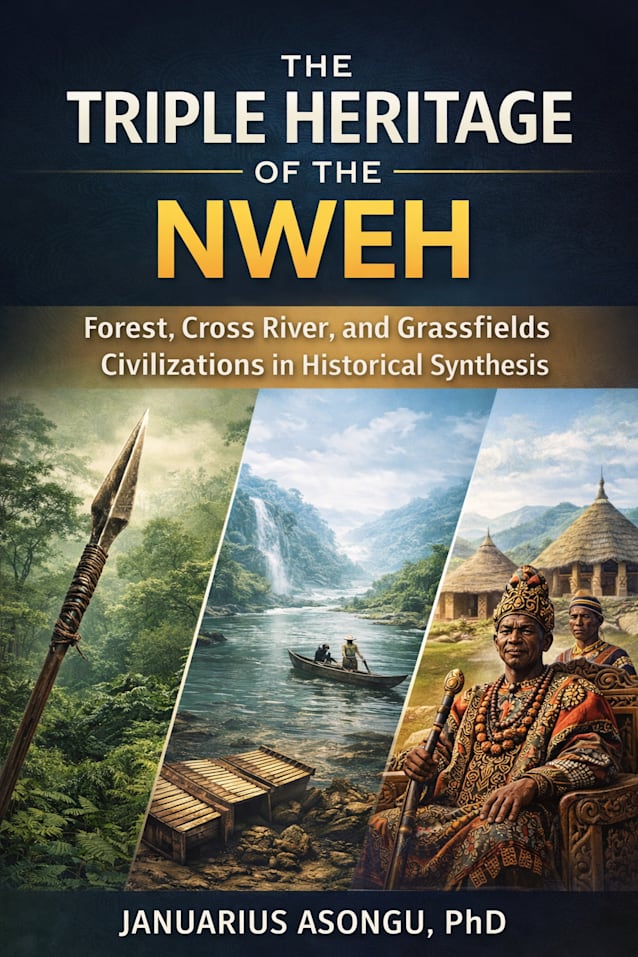
Asongu has also contributed significantly to historical, cultural, and anthropological scholarship. His work The Triple Heritage of the Nweh represents an important effort to document and interpret the history, identity, traditions, and transformations of the Nweh people.
More broadly, his scholarship seeks to preserve indigenous knowledge systems while critically engaging the forces of colonialism, globalization, modernization, and cultural change. He argues that sustainable development requires respect for cultural memory, historical consciousness, and local knowledge rather than their displacement by external models.
His work demonstrates how historical and anthropological inquiry can contribute to cultural renewal, social cohesion, and the preservation of collective identity in rapidly changing societies.
Civilizational Studies and Epistemic Sovereignty
Among Asongu's most innovative recent contributions is his work in civilizational studies. Through the concepts of Epistemic Fracture and Epistemic Sovereignty, he advances a novel explanation for the rise and decline of civilizations.
He argues that civilizations flourish when their institutions remain committed to truth, learning, self-correction, and responsible action. Conversely, civilizations decline when their knowledge systems become distorted, politicized, or disconnected from reality. Educational institutions, governments, religious organizations, media systems, and cultural narratives all play crucial roles in shaping a civilization's capacity for renewal.
His work suggests that many contemporary crises—including misinformation, institutional distrust, democratic instability, cultural fragmentation, and social polarization—are fundamentally epistemic crises. Through the concept of Epistemic Sovereignty, he proposes pathways for rebuilding societies capable of critical reflection, institutional learning, and sustainable flourishing.
Conclusion
Januarius Asongu's significance lies not merely in the breadth of his scholarship but in the coherence of his vision. Philosopher, theologian, psychologist, educator, business scholar, technologist, human rights advocate, peacebuilder, and institutional leader, he has consistently pursued a single overarching goal: the reconstruction of fragmented knowledge in service of truth, freedom, justice, and human flourishing.
Whether developing Critical Synthetic Realism, advancing Synthetic Theological Realism, creating Critical Synthetic Counseling, defending human rights, promoting educational access, addressing technological risks, advocating for marginalized communities, examining constitutional conflicts, or exploring the fate of civilizations, his work reflects a rare commitment to intellectual integration and practical transformation.
At the heart of his scholarship lies the conviction that societies flourish not merely through wealth, power, or technological advancement, but through institutions capable of learning, self-correction, truth-seeking, and responsible action. In an era increasingly marked by fragmentation, uncertainty, and institutional distrust, Asongu's interdisciplinary project offers a distinctive vision of civilizational renewal grounded in truth, dignity, freedom, responsibility, and the flourishing of persons and communities alike.
Reconstructing Knowledge, Human Flourishing, and Civilizational Renewal in the Twenty-First Century
Introduction
Januarius Jingwa (JJ) Asongu, PhD, is a philosopher, theologian, psychologist, educator, author, institutional leader, human rights advocate, and interdisciplinary scholar whose work seeks to address one of the central challenges of the modern world: the fragmentation of knowledge and its consequences for human flourishing,...
Books
View All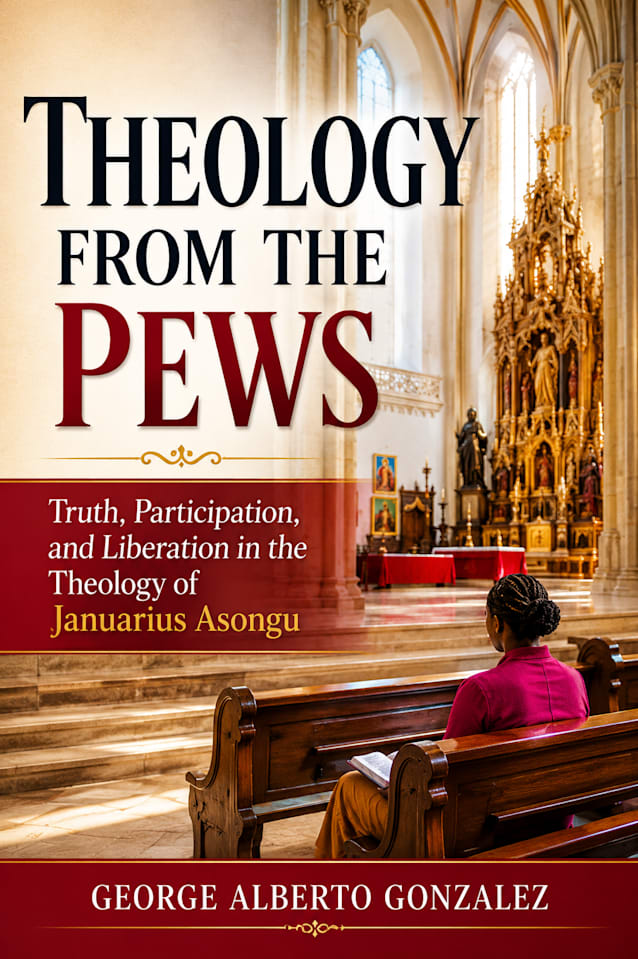
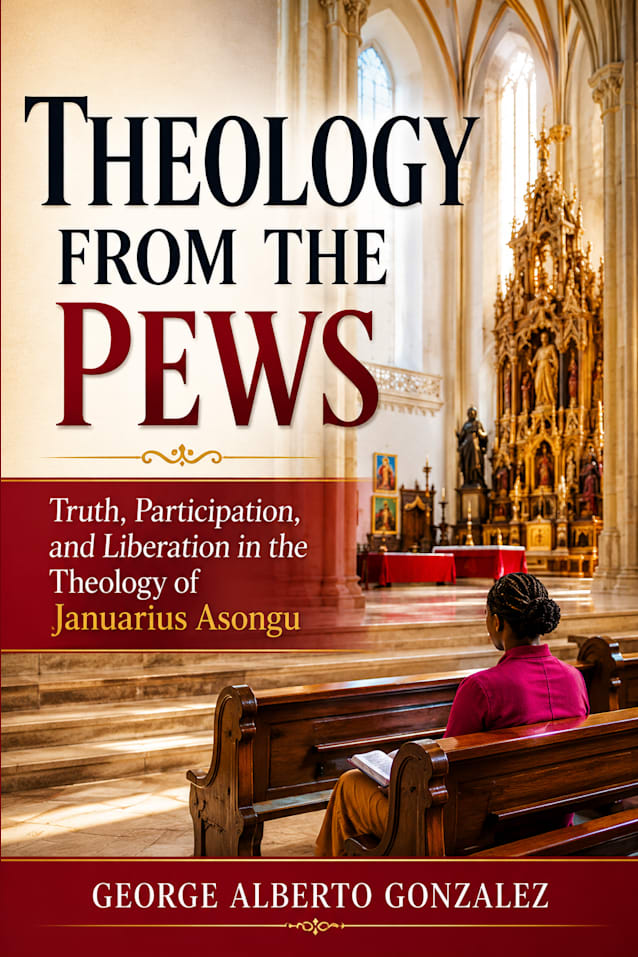
Theology from the Pews
Truth, Participation, and Liberation in the Theology of Januarius Asongu
Theology from the Pews is the first full-length theological study of the emerging thought of Januarius Asongu, one of the most ambitious contemporary attempts to reconstruct Christian theology for an age marked by fragmentation, institutional distrust, and the crisis of truth. Written by Rev. Fr. George Alberto Gonzalez, this groundbreaking...
Read moreChoose Your Retailer
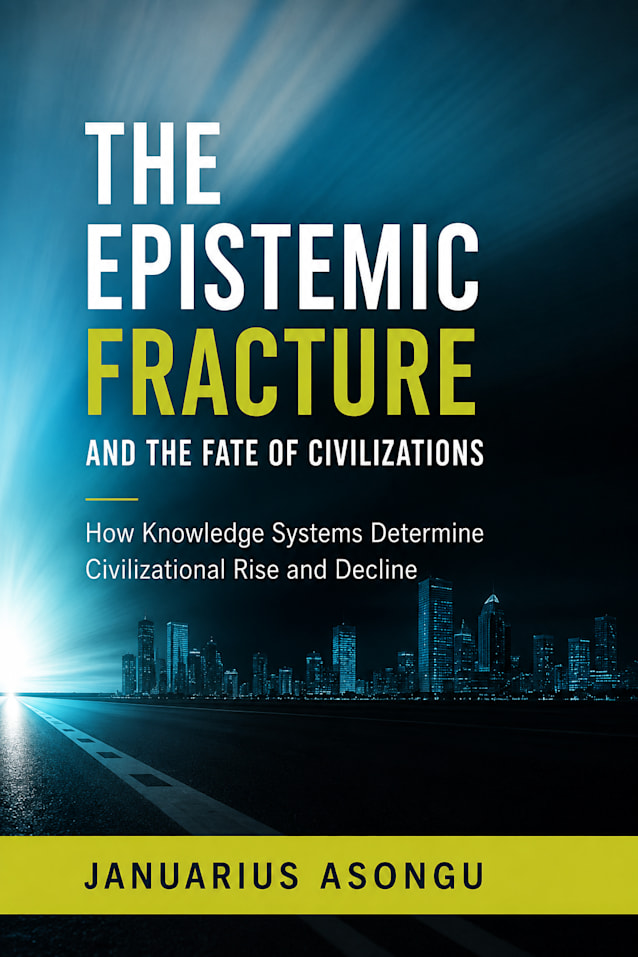
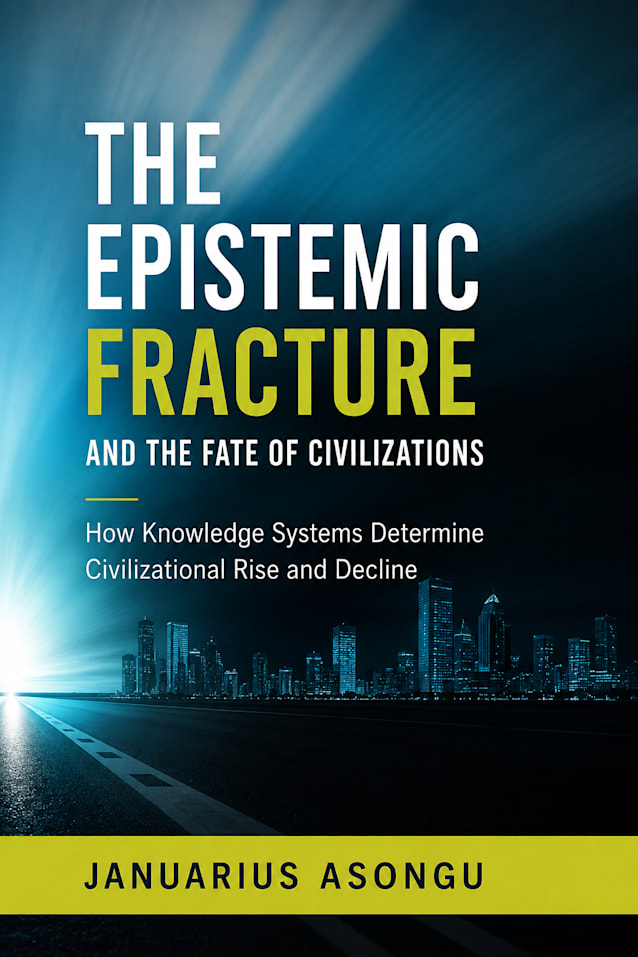
The Epistemic Fracture and the Fate of Civilizations
How Knowledge Systems Determine Civilizational Rise and Decline
Why do civilizations rise, flourish, and ultimately decline? Why do some societies adapt, innovate, and endure while others stagnate, fragment, or disappear? In The Epistemic Fracture and the Fate of Civilizations, philosopher and public intellectual Januarius Asongu advances a bold and original answer: the destiny of civilizations is determined...
Read moreChoose Your Retailer
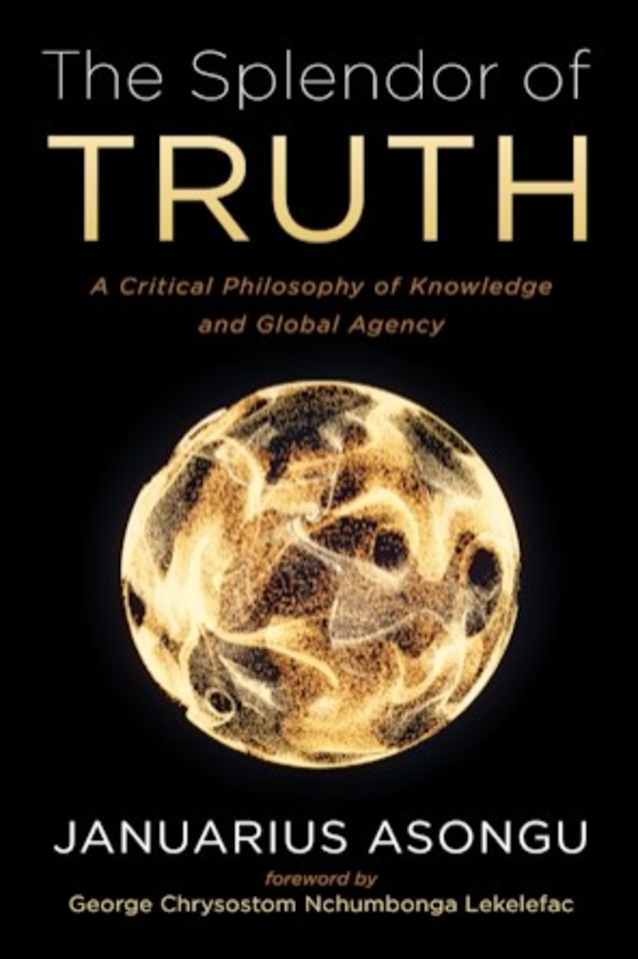
The Splendor of Truth
A Critical Philosophy of Knowledge and Global Agency
The Splendor of Truth: A Critical Philosophy of Knowledge and Global Agency presents Asongu’s groundbreaking philosophical system, Critical Synthetic Realism (CSR)—a bold defense of objective truth, rational inquiry, and moral responsibility in an age marked by epistemic confusion and social unrest. Bridging theology, science, psychology, and...
Read moreChoose Your Retailer
Other Writing
Abstract
The persistence of violent conflict despite an abundance of peace declarations, diplomatic initiatives, and institutional interventions exposes a fundamental gap between the rhetoric of peace and the disciplined practices required to sustain it. This chapter addresses that gap through Liberative Realism, drawing on Januarius Asongu’s Critical Synthetic Realism, Synthetic Theological Realism, and Critical-Liberative Theology. It argues that conventional peacebuilding remains...
Previous study has assessed patient awareness about management of sickle cell disease (SCD) which indicates that there is a lack of awareness about the disease and possibly a need for more awareness. Therefore, our study aimed at Awareness & Knowledge of Sickle Cell Disease in Rivers State, Nigeria. The study was conducted from October 2018 to February 2019. A questionnaire was distributed among 154 persons selected from among the general public. Most (75.0%) had heard of SCD and 35.0%...
Praise
"In The Splendor of Truth, Januarius Asongu offers a courageous and intellectually rigorous defense of objective truth in an age of relativism and confusion. His framework of Critical Synthetic Realism unites metaphysical realism, epistemic humility, and moral responsibility into a compelling vision of human agency. This work is both philosophically serious and ethically urgent, restoring confidence in reason as a force for liberation and the common good."
–
CHRISTOPH HANS MESSNER, Human Rights Activist, York, PA, USA
"I wholeheartedly endorse this book (The Splendor of Truth) and recommend it to a wide audience. The author presents the
subject with clarity, depth, and thoughtful insight, making complex ideas accessible without sacrificing intellectual or spiritual richness. From the very first chapter, the book engages the reader and invites reflection, learning, and practical application.... The writing style is engaging, balanced, and respectful of the reader's intelligence, whether one approaches the book as a student, professional, or person of faith. This book is not only informative but transformative. It challenges assumptions, deepens understanding, and encourages growth in both thought and practice. I believe it will be a valuable resource for individuals, classrooms, libraries, and anyone seeking deeper insight into the subject."
–
GEORGE GONZALEZ, Priest, Professor, and Chaplain, TX, USA
“Beyond Doctrine is a courageous and transformative theological vision. Asongu unites rigorous scholarship with a prophetic call for liberation, offering a faith that confronts injustice and empowers authentic human freedom. A vital contribution to contemporary theology.”
–
George Chrysostom Nchumbonga Lekelefac, Canon Lawyer, Oklahoma City, OK, USA
Latest Updates
Januarius Asongu, PhD
Abstract
The Catholic Church’s claims concerning revelation, doctrinal authority, and divine guidance coexist with a historical record containing significant...
By Prof. Januarius Asongu
From the Formal Curriculum to the Deep Curriculum
Introduction
Education stands at a paradoxical moment in human history. Never before have societies...
Januarius Asongu
Abstract
This article addresses a foundational philosophical tension emerging from contemporary decolonial thought: whether the historical situatedness of...
Blog
By Januarius Asongu, PhD
Christian theology has long maintained that original sin wounds not only the human will but also the intellect. We remain capable of knowing truth, yet our relationship with truth is vulnerable to ignorance, self-deception, disordered desire, and distortion. Critical Synthetic Realism (CSR) proposes the concept of Epistemic Fracture as a contemporary framework for understanding these noetic effects of humanity's fallen condition.
Epistemic Fracture, however, is not a...
By Januarius J. Asongu, PhD
This morning, at the 10:30 Mass at St. Joseph Parish in Middletown, Delaware, I witnessed something both ordinary and profound. A young family brought their infant daughter forward for baptism.
I was deeply moved.
At a time when church attendance is declining across much of the United States, churches are consolidating or closing, monasteries face diminishing vocations, and growing numbers of young people identify with no religious tradition, here was a young family...
By Januarius Asongu, PhD
I generally avoid the politics of French Cameroun. My principal concern has long been the emancipation of the former British Southern Cameroons, today commonly called Ambazonia. Yet, given what I regard as the annexation of Ambazonia by La République du Cameroun, developments in Yaoundé cannot simply be ignored. Political change there will inevitably affect Ambazonia, just as the unresolved Ambazonian question will continue to shape Cameroun’s future.
President Paul...
Join my mailing list
Get exclusive content and updates about my upcoming books.