Forced Unity
About
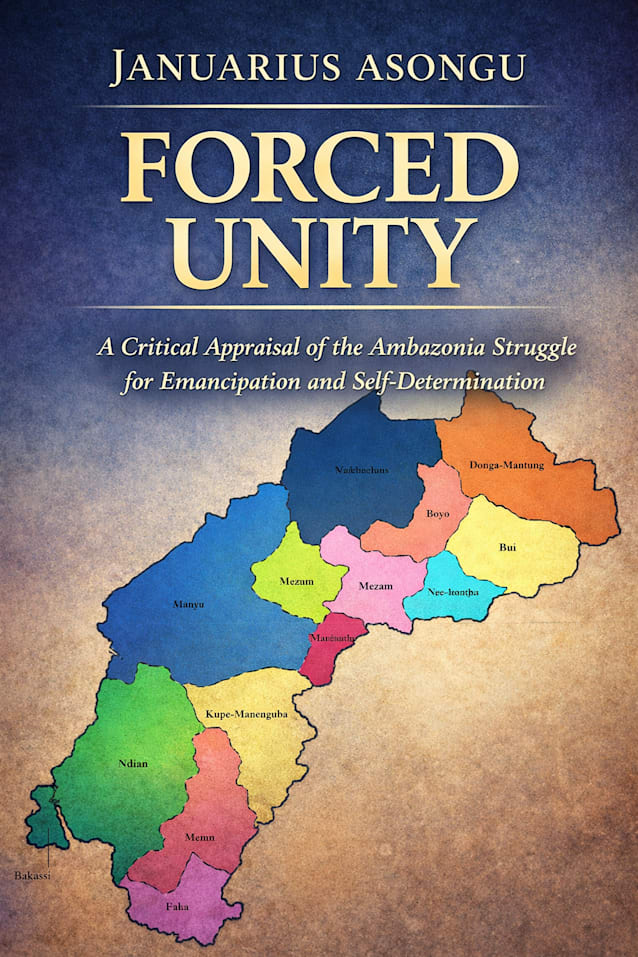
Forced Unity: A Critical Appraisal of the Ambazonia Struggle for Emancipation and Self-Determination
A Constitutional and Moral Indictment
Forced Unity: A Critical Appraisal of the Ambazonia Struggle for Emancipation and Self-Determination is not merely a political account; it is a profound constitutional history and a moral indictment of the processes that led to the ongoing Anglophone Crisis in Cameroon. Authored by Januarius Jingwa Asongu, PhD, a liberation theologian and scholar, the book argues that the current armed conflict is the inevitable consequence of a constitutional rupture—the systematic and forceful dismantlement of the 1961 Federal Constitution which originally united the French-administered Republic of Cameroon and the former British Southern Cameroons (Ambazonia).
Dr. Asongu meticulously chronicles the history of this betrayal. The book details how, between 1961 and 1972, the Francophone-dominated central government systematically eroded the autonomy of the Anglophone state. This process culminated in the unilateral abolition of the federal system via a 1972 referendum, establishing the unitary state. This “forced unity” led to the continuous marginalization of the Anglophone population, including the suppression of their distinct common law legal system and the British-inherited educational structure, triggering a deep crisis of identity, governance, and trust.
The Legal and Ethical Climax
The core of the book connects this historical injustice directly to the brutal conflict that ignited in 2016. Asongu applies the principles of Liberation Theology to the crisis, framing the struggle not just as a demand for political rights, but as an ethical defense of the oppressed against institutionalized state violence. He argues that the conflict escalated because all peaceful and constitutional avenues for redress were repeatedly blocked, leaving the population no choice but to escalate their demands to self-determination.
Crucially, the book establishes its legal authority by detailing Dr. Asongu’s personal role as the lead complainant in the landmark case, Communication 701/18, before the African Commission on Human and Peoples’ Rights (ACHPR). The ACHPR’s decision provided a major international breakthrough, legally affirming the severity of the human rights violations and mandating the Government of Cameroon to hold an “inclusive dialogue” with the peoples of Southern Cameroons. This decision provides the essential legal grounding for the peace framework proposed in the final sections of the book.
The Blueprint for Peace and Democratic Closure
The culmination of Forced Unity is the presentation of the Alliance for Peace and Justice (APJ) Peace Plan, a detailed, two-phase blueprint designed to achieve democratic and permanent closure to the conflict.
The APJ Plan demands an immediate, internationally monitored ceasefire followed by the core steps:
- Constitutional Restitution: The immediate restoration of substantive self-governance, fiscal autonomy, and the distinct Anglophone institutions, effectively reversing decades of centralization.
- Internationally Guaranteed Independence Referendum: A sovereign, free, and fair referendum, guaranteed by international actors, allowing the people of Ambazonia to finally choose their ultimate political future, whether that is a return to a true federation or full independence.
In essence, Asongu’s work is a powerful call for accountability, legal recognition, and a structured path toward sustainable peace, arguing that only a globally supervised act of self-determination can dissolve the title’s oppressive legacy of “Forced Unity.”