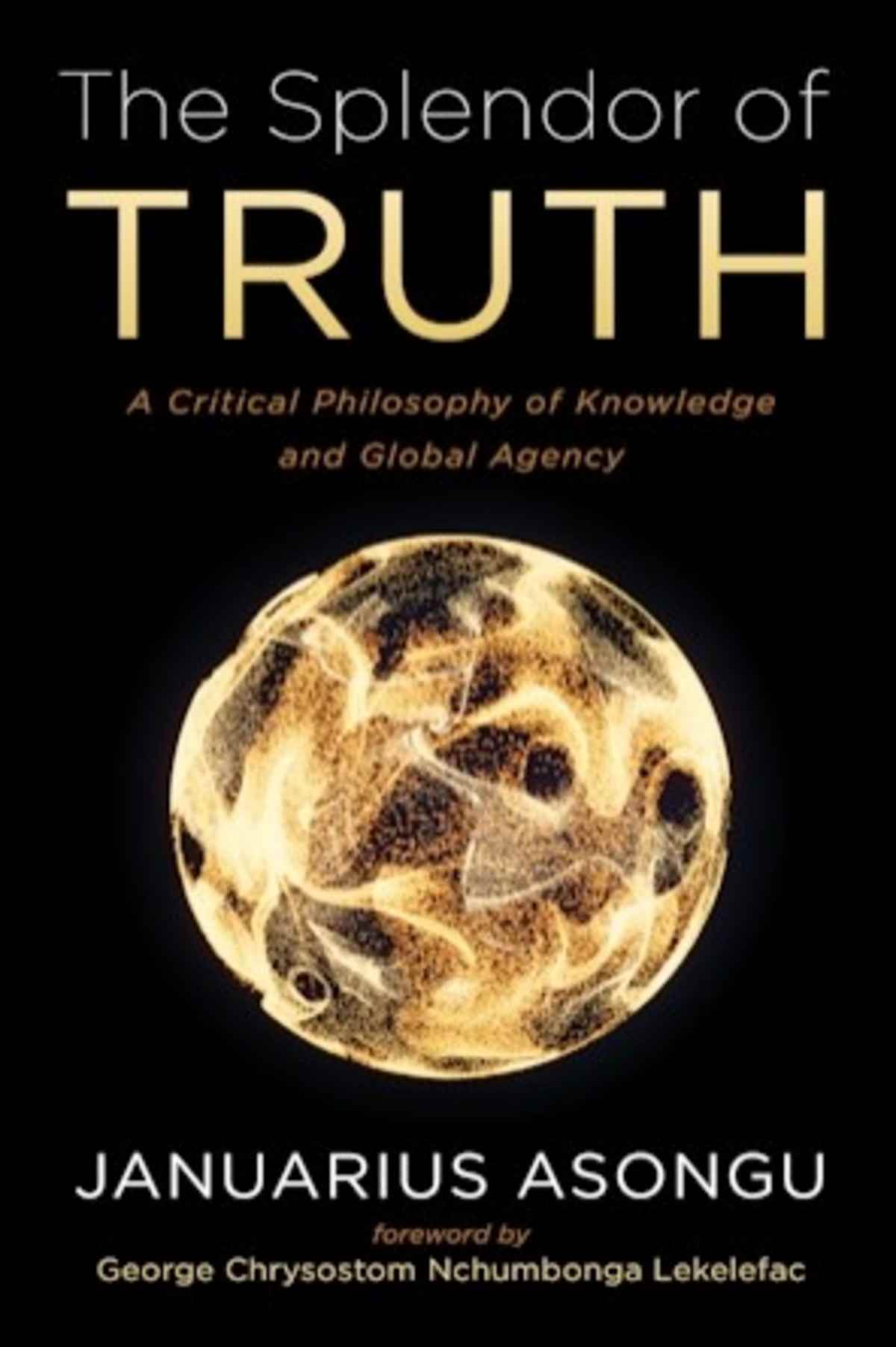
By Januarius Asongu, PhD, author of The Splendor of Truth and Critical Synthetic Realism
In the early development of my philosophical work, I often described my intellectual approach as eclectic. The term felt appropriate at the time. My research drew from diverse traditions—Thomistic metaphysics, critical rationalism, liberation theology, contemporary epistemology, social theory, and global philosophical conversations. I resisted intellectual confinement within a single school of thought, preferring openness to insight wherever truth could be found.
Yet it is important to acknowledge that my intellectual journey did not begin in neutrality. Having been formed within the scholastic tradition, my philosophical instincts were always shaped by a fundamentally Thomistic and realist orientation. The scholastic method trained me to believe that truth is intelligible, that reality precedes interpretation, and that reason participates meaningfully in the discovery of being. Even when I explored diverse intellectual traditions, this realist inclination remained a quiet but persistent foundation beneath my work.
Eclecticism, in its classical sense, refers to selecting ideas from multiple traditions without strict allegiance to any one system. It values intellectual freedom, curiosity, and methodological flexibility. Many thinkers begin eclectically because genuine inquiry rarely starts with a finished framework. One explores, compares, borrows, and experiments. Eclecticism therefore represents an important stage of philosophical development: it reflects intellectual searching.
Over time, however, I recognized an important limitation. Eclecticism gathers insights, but it does not necessarily integrate them. Ideas may coexist without forming a unified vision. The result can be intellectual plurality without structural coherence—an assortment of perspectives rather than a philosophy capable of explaining reality in a consistent and systematic way.
As my work matured, particularly through the development of Critical Synthetic Realism (CSR), it became clear that the term eclectic no longer adequately described what I was doing. My aim was not merely to assemble useful ideas from various traditions. I was attempting something more demanding: integration grounded in realism.
This realization led me to adopt the term synthetic.
A synthetic philosophy does not simply select among competing views; it seeks to bring them into meaningful relationship. Synthesis requires identifying the partial truths present within different intellectual traditions and organizing them into a coherent framework capable of addressing shared human questions. Where eclecticism collects, synthesis constructs. Where eclecticism juxtaposes, synthesis reconciles.
Critical Synthetic Realism emerged from the conviction that contemporary thought suffers from fragmentation. Modern intellectual life is marked by disciplinary isolation, ideological polarization, and epistemic skepticism. Theology, philosophy, science, and social theory often speak past one another. Eclectic borrowing alone cannot resolve this crisis. What is required is a philosophical architecture capable of holding diverse insights together while remaining anchored in a realist understanding of truth.
CSR therefore operates through three mutually reinforcing commitments.
First, it is critical. No tradition possesses final immunity from questioning. Human knowledge remains fallible, historically situated, and open to correction. Critical inquiry protects philosophy from ideological rigidity.
Second, it is synthetic. Rather than choosing between realism and constructivism, faith and reason, tradition and innovation, CSR seeks integrative understanding. The goal is not compromise but higher-order coherence—a framework in which distinct insights illuminate one another without losing their integrity.
Third, it is realist. Reality exists independently of our interpretations, even though our access to it is mediated through language, culture, and historical experience. Here the Thomistic inheritance becomes explicit: truth is grounded in being, and knowledge is participation in reality rather than its invention.
The transition from eclecticism to synthesis therefore marks more than a change in vocabulary. It reflects the maturation of a philosophical project rooted in scholastic realism yet responsive to contemporary intellectual fragmentation. Eclecticism described the period of exploration; synthesis names the achieved integration.
Philosophy, at its highest level, cannot remain a marketplace of disconnected ideas. It must become a disciplined effort to understand reality as an intelligible whole. Critical Synthetic Realism represents my attempt to advance that task—to renew metaphysical realism, integrate global intellectual traditions, and restore confidence that truth remains accessible through rigorous, synthetic reasoning.
The shift from eclectic to synthetic thus signals the deeper ambition of CSR: not merely to engage philosophical diversity, but to unify it within a coherent vision of reality ordered toward truth and human flourishing.