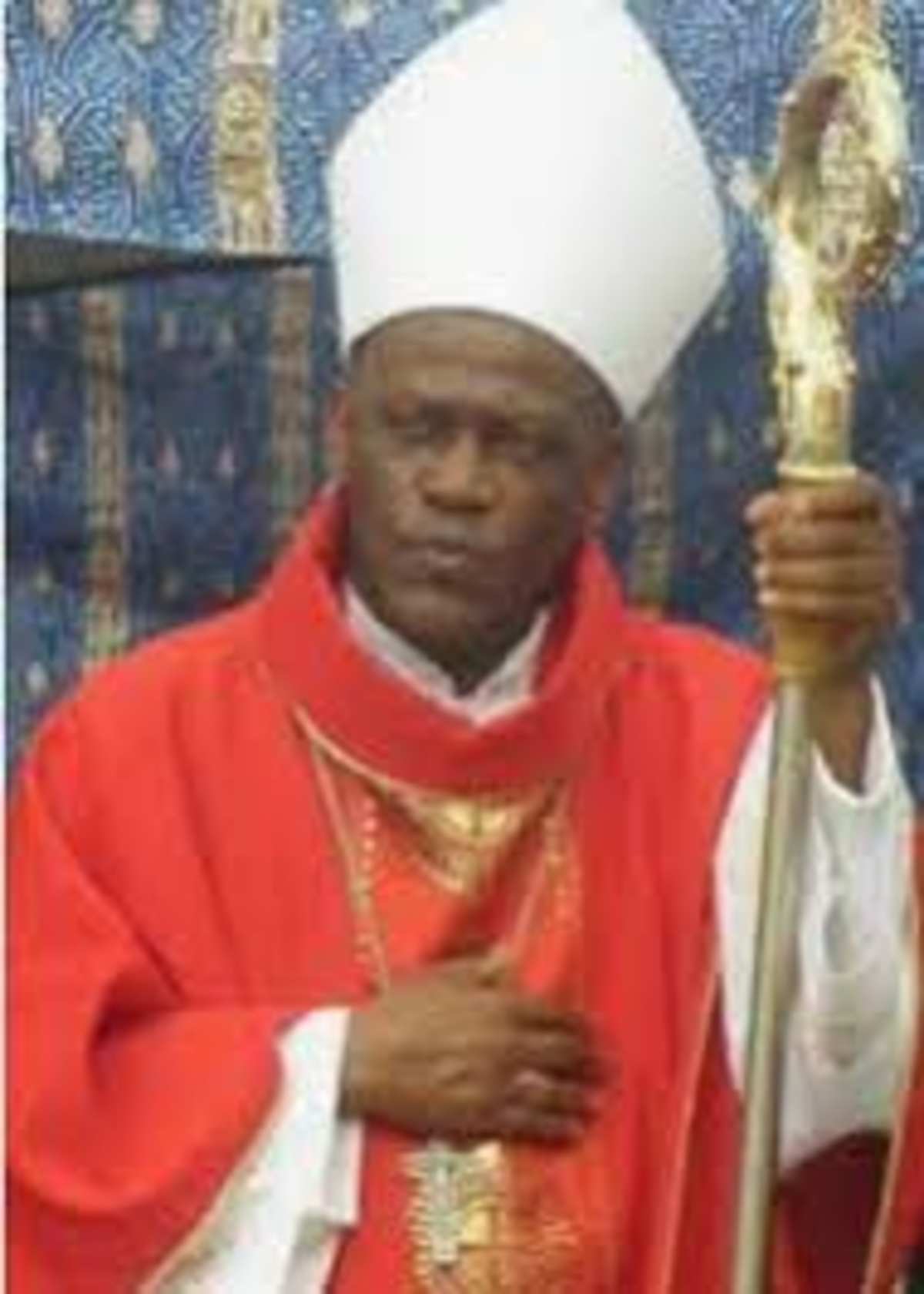
By Prof. Januarius Asongu (Written on the occasion of Mgr Bushu's 80th birthday on July 31, 2024)
“How far that little candle throws its beams! So shines a good deed in a naughty world.”
~ William Shakespeare (The Merchant of Venice)
His Lordship, the Right Reverend Dr. Immanuel Banlanjo Bushu, PhD, DD, emeritus bishop of Buea, stands as a towering figure of faith, leadership, and service. His tenure as bishop was marked by profound dedication to his flock, a deep commitment to education, and unwavering efforts to foster peace and unity in a diverse and sometimes divided society. His life and work offer a compelling testament to the transformative power of religious leadership rooted in the divine virtues (faith, hope, and charity), as well as humility, and a steadfast commitment to the teachings of Christ.
Pope Paul VI wrote in 1975 that people “are more impressed by witnesses than by teachers, and if they listen to these it is because they also bear witness” (Evangelization in the Modern World, #41). As a former seminarian who has remained close to Holy Mother Church, I have known many priests and bishops, but none in my estimation comes close to the saintly Bishop Bushu. He is not only a teacher who bears witness, but he does so with such extraordinary humility, patience, and simplicity that is rare to find.
As we celebrate Bishop Bushu’s 80th birthday, let us reflect on his contributions. One cannot help but be inspired by his example. His life is a testament to the enduring power of faith, the importance of education, and the necessity of striving for peace and unity. As we celebrate his legacy, we are called to emulate his virtues in our own lives – love of God and the Church, and working towards a more just, compassionate, and harmonious world.
I have known Bishop Bushu for over 34 years, beginning in 1990 when he was my rector at Saint Thomas Aquinas Major Seminary (STAMS), Bambui. As an editor of the seminary magazine, Searchlight, I had the privilege of profiling him following his appointment as the fourth bishop of Yagoua. Being about my dad’s age, one may find it normal that I see him as a father figure, but my admiration for him is unqualified due to his authenticity. Besides my parents, no one else has had a greater influence on my life.
As a seminary rector, he strove to build priests who would model Christ, and did so per the directives of the Church’s hierarchy especially as contained in Optatum Totius: Second Vatican Council Decree on Priestly Training, and Pastores Dabos Vobis: Apostolic Exhortation on the Formation of Priests in the Circumstances of the Present Day. For him, seminarians and priests must not only do good but must also be seen as doing good—for perception is a reality to the beholder. Some seminarians argued that he was too strict and that they had signed up to be priests, not monks. But that was endearing for me, and when he became bishop, I had hoped that he would start his own congregation. For him, the dignity of the priesthood was grounded in moral rectitude and integrity, and in the observance of the priestly vows of poverty, chastity, and obedience. He lived by example, disinterested in wealth as seen in his driving an old Volkswagen Beetle, a vehicle that his successor rejected and relegated to the seminary’s culinary department.
When he became bishop of Yagoua in 1993, he requested volunteers from the final year philosophy class at STAMS to come to his diocese for the mandatory pastoral year after philosophy studies. I was the only one in our class of 14, who took the challenge, but unfortunately my then-bishop, Mgr. Pius Suh Awa of Buea, misconstrued my motives and instead delivered me a stern warning never to suggest to him where I wanted to be assigned. Although I never spent the pastoral year in Yagoua under Bishop Bushu’s tutelage as I had hoped, I later visited him in 1994. While in Yagoua, he assigned me to Viri Parish at the borders of Cameroon and Chad. The then parish priest of Viri told me that he had worked under three African bishops – Mgr. Christian Tumi (who later became a Cardinal), Mgr. Antoine Ntalou (who later became the Archbishop of Garoua), and now Mgr. Immanuel Bushu. Comparing the three bishops, he said that while Mgrs. Tumi and Ntalou were “good” bishops, Mgr. Bushu is a “holy bishop.” This was a befitting tribute, and paraphrasing Shakespeare, I am glad that this light from Nso’ could shine in this weary world.
As a young, starry-eyed seminarian, I was attracted to the writings of Fr. Jean-Marc Ela (1936 – 2008) and was excited by his concept of “church under the tree.” Bishop Bushu inherited a diocese with very few physical churches and a Catholic population of just about 32,000. After my six-week stay in the diocese, he asked me what I thought of the theology of “church under the tree.” I answered that while Ela’s theology was an excellent example of contextualization, community-centered approaches to theology, and the spirit of liberation theology in Africa, it had some practical challenges. I had observed that these outdoor churches looked too casual, and not only exposed the faithful to the elements, but also lacked a sense of the sacred. He smiled and laid out to me his plan to build not just physical church structures, but also strengthen the faith of the small Catholic community in a rather hostile environment. Little wonder, he more than doubled the Catholic population to about 75,000 in under 15 years.
Bishop Bushu brought that same enthusiasm to Buea diocese in 2007 and in under 13 years he had more than doubled the number of parishes in the diocese. This meant more work for his priests, many of whom detested it and accused him of not having their welfare in mind. I understand that Bishop Bushu had faced a similar predicament in Yagoua, where despite the tremendous growth of faith in the diocese, his priests had increasingly resented his rigor. It is also known that some people, the religious and the laity included, have exploited his naturally trusting disposition as well as his humility to undermine his administration. This speaks much, not about his weakness, but that of those who have exploited this good man.
Bishop Bushu’s pastoral care was characterized by an exceptional ability to connect with people from all walks of life. His approach was always inclusive, recognizing the inherent dignity of every individual. He worked tirelessly to ensure that the spiritual and physical needs of his Christians were met, often going above and beyond to provide support and guidance. His homilies were not only spiritually enriching but also deeply relevant to the challenges faced by his community, offering solace and hope in times of hardship.
Understanding the crucial role of education in societal development, Bishop Bushu made significant contributions to educational initiatives within Buea diocese, including the establishment of a diocesan university institute. He believed that education was a powerful tool for personal and communal transformation. Under his leadership, numerous schools were established, and existing ones were improved, providing quality education to thousands of young people. Bishop Bushu’s advocacy for education was not limited to academic excellence; he emphasized the importance of moral and spiritual development, nurturing well-rounded individuals who could contribute positively to society. He was also very supportive of my institution, Saint Monica University, Buea, and has graciously honored our invitation to say mass at the institution. For this, I am personally very grateful!
One of the most striking aspects of Bishop Bushu’s character is his humility. Despite his high office, he remained approachable and grounded, embodying the principle of servant leadership. He was often seen engaging directly with the most vulnerable members of his community, offering not just material assistance but also compassion and companionship. This humility endeared him to many and reinforced the credibility of his leadership.
The Lord Himself indicated that He had a special relationship with His priests when, at the Last Supper, He poured out from His Sacred Heart His own priestly prayer (cf. John 17). This union with Christ has been guiding and shaping the life of Bishop Bushu. It has rightly defined his personality, and it is difficult to conceive of his life, apart from the priesthood. Always dignified, courteous, humble, and kind, he seemed to inhabit a different world from ours—certainly different from the godless one that inspires ambition, greed, lust, and all the capital vices to which so many—priests included—have succumbed in our day. Yet we know so well that virtues such as these are not native to any of our fallen race; they are rather the fruit of self-discipline and prayer, exercises with which Bishop Bushu is well acquainted.
Bishop Immanuel Banlanjo Bushu’s legacy is a rich tapestry woven from countless acts of kindness, visionary leadership, and unwavering faith. Even in retirement, his influence continues to resonate within the dioceses he served and beyond. His life’s work serves as a powerful reminder of the profound impact that one dedicated individual can have on their community and the world.
Felicem Diem Natalem (Happy Birthday!)
*Bishop Immanuel Bushu, the Bishop Emeritus of Yagoua and Buea, Cameroon, was born on July 31, 1944 in Ngomrin in the Bui Division of the North West Region of Cameroon.