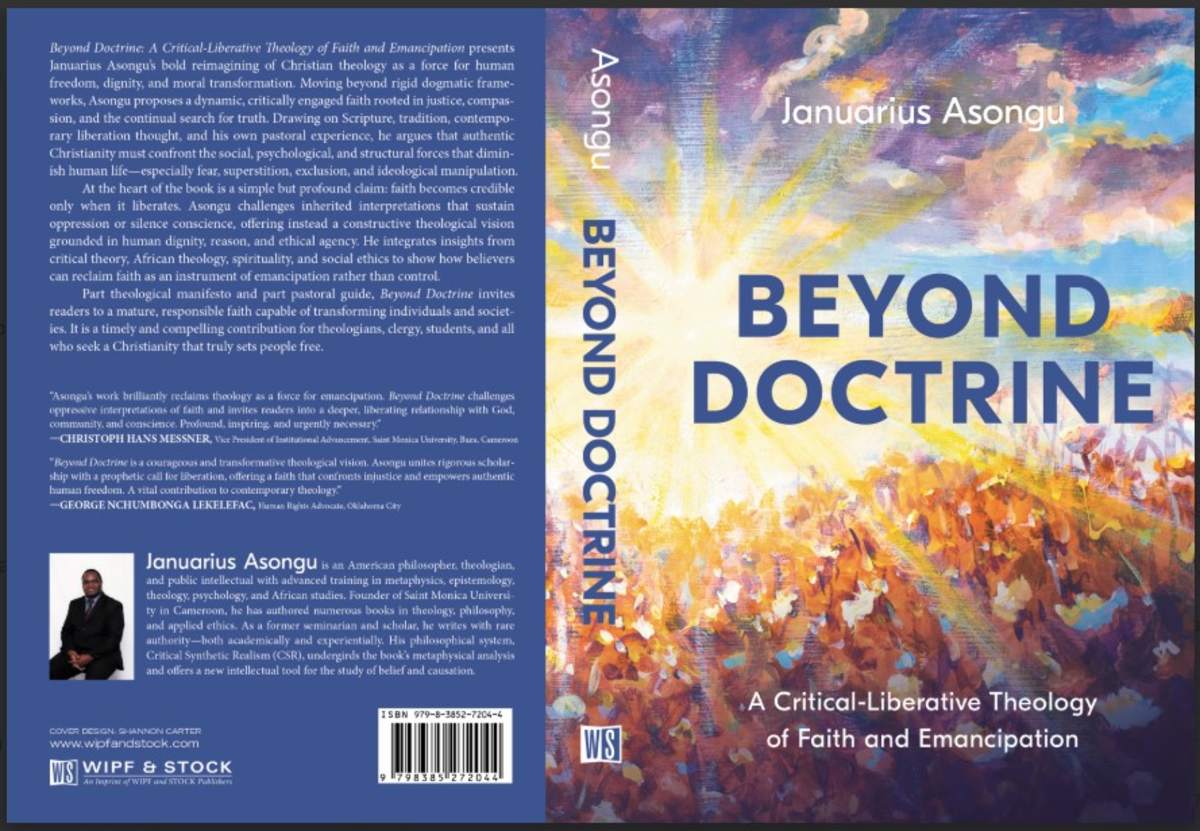
By Januarius Asongu, author of Beyond Doctrine
Each year, Lent offers Christians a sacred season of forty days devoted to fasting, repentance, prayer, and moral renewal. Rooted in Christ’s forty days of fasting in the wilderness, Lent is not merely a ritual observance. It is an invitation to confront truth—truth about oneself, truth about one’s society, and truth about one’s responsibilities in the world. It is a season that calls Christians to step back from distraction and examine the deeper question of who they are and how they live, not only in private life but also in public life.
At its core, Lent is about restoring order within the human person. Through fasting, the believer disciplines desire. Through prayer, the believer reorients toward truth. Through repentance, the believer acknowledges imperfection and opens the possibility of transformation. These practices are not acts of withdrawal from reality, but acts of preparation for engaging reality more truthfully. Lent strengthens the moral clarity necessary to live responsibly in a complex and often unjust world.
This moral clarity inevitably extends to political life. Politics, at its deepest level, is not simply about power, but about justice, truth, and the ordering of society. Christians do not cease to be moral agents when they enter the public sphere. Their participation in civic life carries ethical weight. Lent therefore becomes an opportunity for Christians to examine not only their personal conduct, but also their civic conduct—their attitudes toward authority, their treatment of others, and their commitment to truth.
In the United States, political life has become increasingly marked by polarization, distrust, and moral absolutism. Public discourse often rewards outrage rather than understanding, and political identity can become so central that it overshadows deeper moral and spiritual identity. Lent challenges Christians living in such an environment to resist the temptation to define themselves primarily by political allegiance. It calls them instead to remember that their first allegiance is to truth, justice, and the dignity of the human person.
Fasting, in this context, takes on broader meaning. It is not only abstaining from food, but also abstaining from hatred, from intellectual arrogance, and from the impulse to dehumanize those with whom one disagrees. It is a discipline of restraint—not only of the body, but of speech and judgment. Lent reminds Christians that moral integrity cannot be suspended for political convenience.
The significance of Lent is equally profound in Cameroon, where political tensions, questions of legitimacy, and struggles over identity have shaped national life for decades. In such contexts, the relationship between faith and public responsibility becomes especially urgent. Lent calls Christians not to withdraw from society, but to renew their moral vision within it. It invites them to examine how fear, resentment, or despair may shape their perceptions and actions.
Prayer during Lent becomes a means of recovering interior freedom—the freedom to think clearly, to act justly, and to resist both cynicism and blind loyalty. Repentance becomes an acknowledgment not only of personal failures, but of the ways individuals may participate, consciously or unconsciously, in systems of injustice or indifference. Lent becomes a season of awakening.
Importantly, Lent also challenges those who hold power, whether political, institutional, or social. It reminds them that authority is not ownership, but stewardship. It reminds them that leadership carries moral responsibility. The temporary nature of human authority calls leaders to humility, justice, and accountability.
For ordinary citizens, Lent offers protection against despair. Political systems may appear immovable, and injustice may appear permanent, but Lent affirms that transformation is always possible. It affirms that renewal begins not with systems alone, but with persons.
The disciplines of Lent—fasting, prayer, and charity—prepare Christians to engage the world not with fear or domination, but with clarity and moral courage. They cultivate humility, which is the foundation of justice. They cultivate compassion, which is the foundation of peace. They cultivate truthfulness, which is the foundation of freedom.
In both the United States and Cameroon, Lent arrives at a time when political life often tests the moral integrity of individuals and communities. It offers Christians a moment to pause, to reflect, and to renew their commitment to truth above ideology, justice above advantage, and human dignity above political victory.
Ultimately, Lent reminds Christians that their role in the world is not simply to win, but to witness—to witness to truth, to justice, and to the possibility of moral renewal in every age.