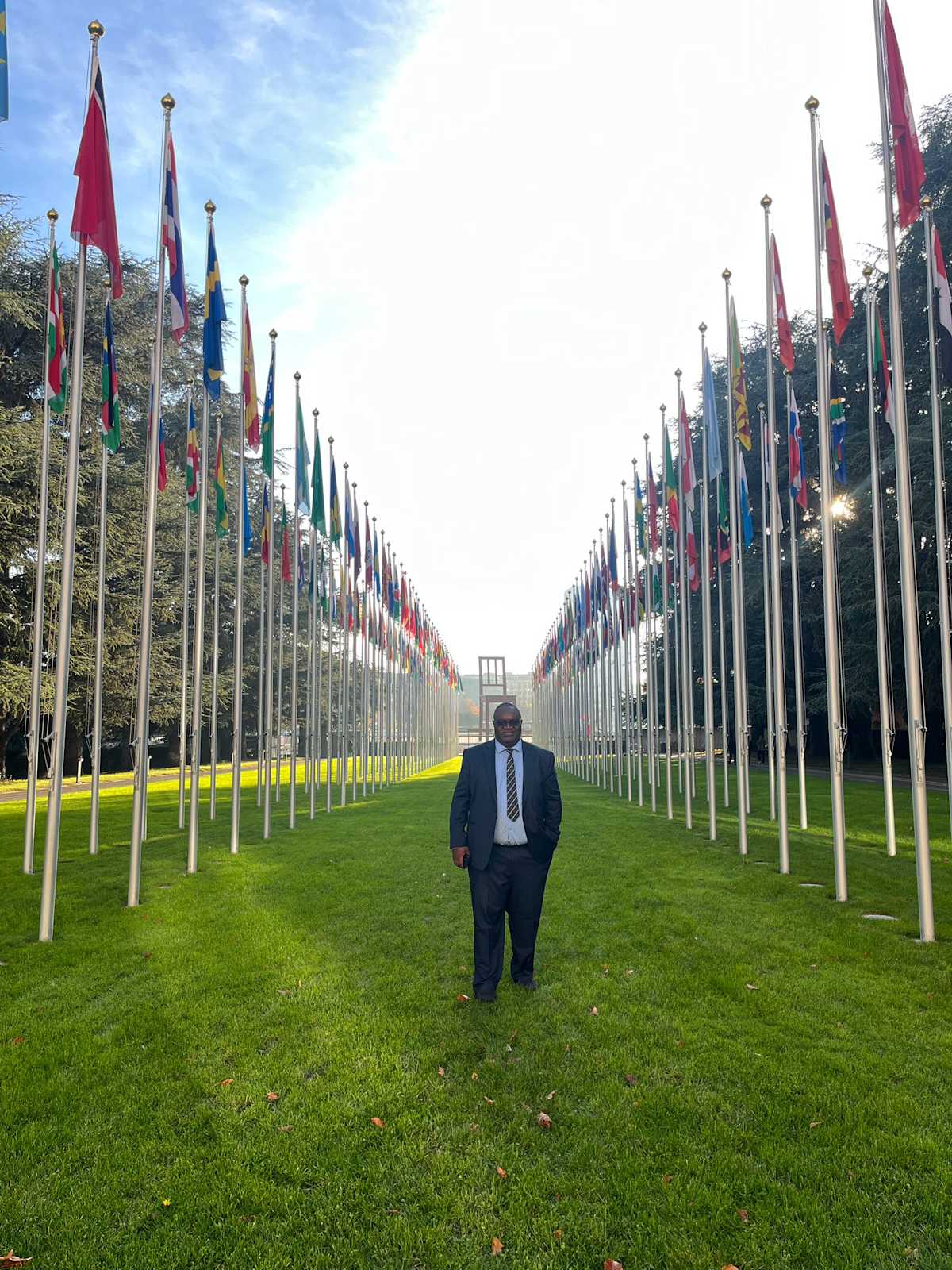
By Dr. Januarius Jingwa Asongu
As the United States and Israel are now engaged in active hostilities against Iran in the Persian Gulf, the world once again finds itself confronting the devastating reality of war in the Middle East. In moments like this, it is worth remembering the voice of a man who spent much of his life warning about precisely such conflicts: Stephen Lendman.
Lendman, the American independent journalist, author, and broadcaster, died on May 9, 2023. For decades he was among the most consistent critics of war and imperial power in American public discourse. His writings challenged dominant narratives about U.S. foreign policy and urged readers to examine conflicts not through political rhetoric but through the lens of moral responsibility.
Today, as bombs fall and geopolitical tensions escalate, his voice resonates with renewed urgency.
A Lifelong Opponent of War
Stephen Lendman’s work was driven by a fundamental conviction: war must always be judged by universal ethical principles. Governments may claim strategic necessity or national security, but for Lendman these claims never eliminated the moral responsibility to evaluate the human consequences of military action.
Throughout his career he warned that powerful states often frame wars in the language of defense or humanitarian intervention while pursuing geopolitical interests. Such narratives, he argued, frequently obscure the human cost of war and the structural dynamics of global power.
His opposition to the 2003 Iraq War became one of the defining moments of his intellectual life. In our co-authored book The Iraq Quagmire: The Price of Imperial Arrogance, we argued that the invasion represented a catastrophic moral and strategic failure. The war, justified by claims that later proved false, unleashed widespread suffering and destabilized an entire region.
For Lendman, Iraq demonstrated how quickly political narratives can override ethical judgment.
The Intellectual as Witness
Lendman believed that intellectuals have a moral obligation to question power. Influenced by thinkers such as Noam Chomsky and Edward Said, he rejected the idea that scholars and journalists should simply echo official narratives.
Instead, he saw the role of the independent thinker as that of a witness—someone who speaks truth even when it challenges political authority or popular opinion.
This commitment shaped his career. Lendman wrote extensively for independent publications and hosted the Progressive Radio News Hour, where he analyzed global conflicts and media narratives. His work consistently encouraged readers to examine evidence carefully and to question the assumptions embedded in mainstream reporting.
For him, seeking truth was not merely intellectual—it was ethical.
Media, Power, and War
One of Lendman’s central insights concerned the role of information in modern warfare. He understood that wars are fought not only on battlefields but also in the realm of public perception.
Governments and media institutions shape narratives that define who is seen as aggressor, victim, or liberator. These narratives influence public opinion and can determine whether wars gain political legitimacy.
Lendman repeatedly warned that critical thinking is essential during periods of conflict. Without it, societies risk accepting simplified or incomplete narratives that obscure the full moral and human dimensions of war.
A Voice for Universal Justice
Another defining feature of Lendman’s work was his advocacy for Palestinian rights. He argued that ethical principles must apply universally and cannot be selectively applied depending on political alliances.
His willingness to defend such positions in American public discourse reflected a broader commitment to moral consistency. For Lendman, justice was not negotiable; it was grounded in the universal dignity of human beings.
This commitment explains why his writing consistently challenged double standards in international politics.
Why His Voice Matters Now
The current war in the Gulf underscores many of the concerns Lendman raised throughout his life. Conflicts in this region rarely remain contained. They carry the risk of wider escalation, humanitarian crises, and long-term geopolitical instability.
Lendman repeatedly warned that wars often begin with confident predictions of quick victories but unfold into prolonged and destructive struggles.
More importantly, he insisted that moral reflection must accompany political decision-making. War cannot be reduced to strategy alone. It must be evaluated in terms of justice, human suffering, and the long-term consequences for global stability.
Remembering a Moral Witness
Stephen Lendman’s legacy is ultimately one of intellectual courage. He believed that the pursuit of truth is a moral vocation and that silence in the face of injustice is a form of complicity.
As the world once again confronts the tragic realities of war, remembering voices like his becomes more than an act of tribute. It is a reminder that critical thought, moral courage, and intellectual independence remain essential for any society that hopes to preserve justice and human dignity.
In times of conflict, such voices are often the ones we need most.