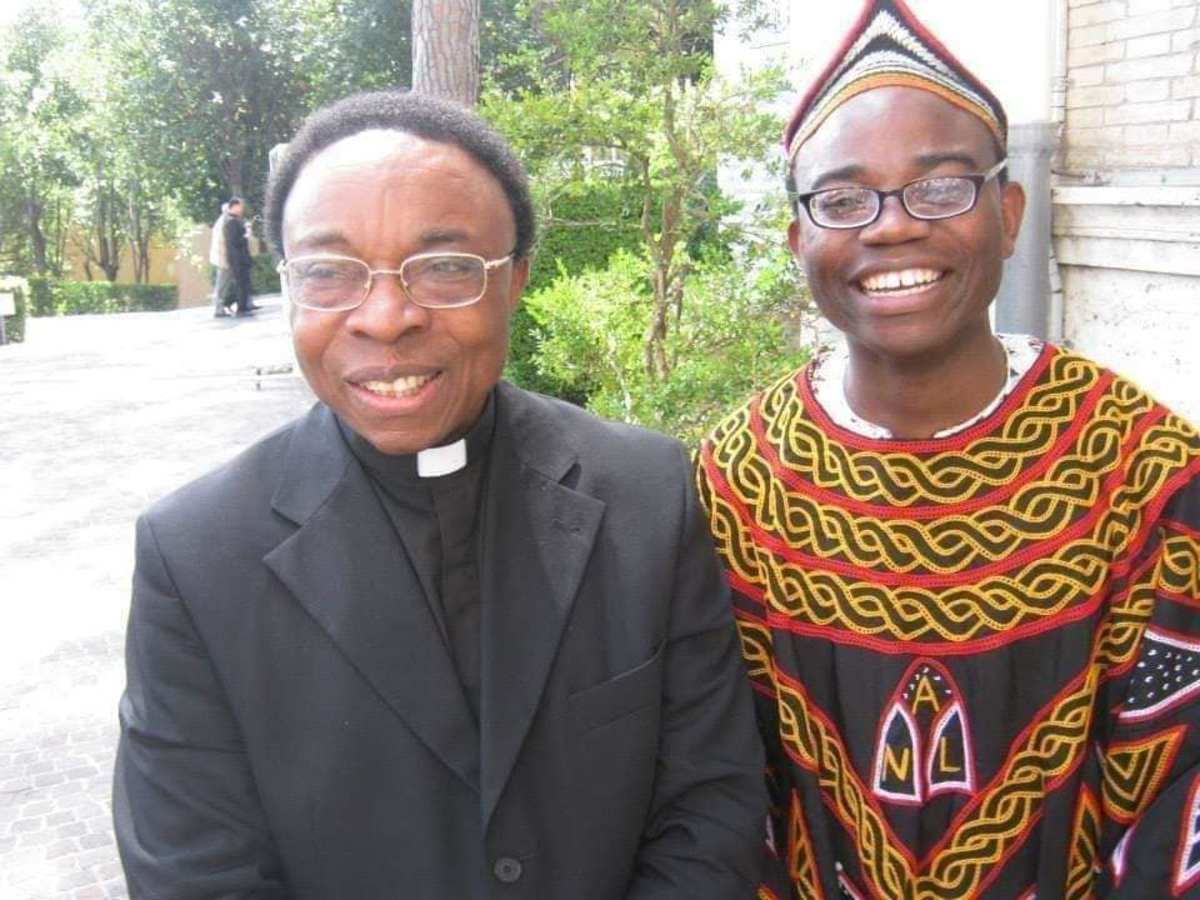
Tribute to Father Emeritus Professor John Okoro Egbulefu, CCE. Written by Sr. Elena Maria Costanzi, (Monastero della Dormizione di Maria, Via della Pisana, Roma). Friday, March 12, 2026
(Original in Italian follows below. Translated from Italian to English by Nchumbonga George Lekelefac, Founder and Director of Nchumbonga Institute of Research, Documentation, Language and Culture, USA)
It was May 1, 1990, when I was called to the parlor for a visit. The visitors were new to me: the Rector, the spiritual father of the Urban College, and a newly appointed professor of sacramental dogmatic theology at the Urbaniana University. He had been sent from Germany to teach there by the then Cardinal Joseph Ratzinger, who had known him personally for some time thanks to his period of study and research in Germany. Yet he was not German, but African!
The visit had been announced to me by Sr. Maria Gianpiccolo, Daughter of the Church: a professor was looking for a translator from German into Italian. At that time I was a young nun, recently out of the novitiate. A small man with black—though not very dark—skin introduced himself, with large black eyes, deep and penetrating. His face was framed by very short hair.
The feast of February 2 in the Byzantine rite is called the “Feast of the Encounter” between Jesus and Simeon, between the New and the Old Testament. In our lives too there are encounters that leave an indelible mark for the rest of our days. I did not yet know it, but that meeting would mark a crucial turning point in my life, a true Copernican revolution. That day also coincided with the anniversary of his priestly ordination.
Thus began an intense collaboration: I helped him translate his dogmatic theology lectures into Italian, as he had arrived in Italy only a few months earlier. I was deeply struck by his way of writing, by the intensity of a thought rooted in God, by the systematic nature and the capacity for synthesis with which he treated every subject. From his texts there shone the absoluteness of God, which permeates everything and gives meaning to all that exists.
I spoke about him with my mother during one of her visits. She too read some pages of his writings and advised me to deepen my acquaintance with that man because of his exceptional qualities. In the following years she would bring me recordings of his lectures, which I listened to with enormous pleasure and great spiritual and intellectual benefit. Gradually my computer filled with lectures, articles, conferences, translations, and more.
Meanwhile he had invited my mother and my brother to follow him to Nigeria: a completely new and unexpected experience for us, but one that my mother accepted with great adventurous spirit.
From childhood, at school, he always occupied the pole position: he came first in every competition he entered. When the Queen of England visited the Nigerian colony, he was chosen to recite a poem in English from memory.
Driving in the chaotic traffic of Rome, he is daring to the limit—almost alarming: he does not tolerate stops, expects everyone to give him the right of way because the destination must be reached in the shortest possible time, punctuating everything with frequent horn blasts. Even some bishops whom he has driven have confirmed this.
His determination and audacity appeared in a sublime way when it came to the Congregation of Christ Emmanuel, which he had been called to found. When I met him, the Congregation was at its beginnings: six Nigerian seminarians wanted to follow him (I remember that one was named Paolino, though he later left); they had been his altar boys during the pastoral year he spent in Nigeria.
He wanted to bring them to study in Italy, but found every door closed. He had fought like a lion even against two apostolic nuncios who succeeded one another in the Nunciature in Nigeria: despite the encouragement of Saint John Paul II and the local bishop—with material help—they placed obstacles to the birth of the work in the Nigerian Church, even suggesting to the Cardinal Prefect of Propaganda Fide at the time that the new religious foundation be prevented. One of the two, years later, would ask Pope Francis to resign from the papacy—an unheard-of act that once again provoked Father John’s attacks against him.
In those years the frequent Rome–Nigeria trips began, at least three per year. The attempts to hinder the flourishing and expansion of the Congregation were and remain the most painful moments: they pushed him to fight on every front, while always remaining aware that above all things there is God. Before the obstacles of life he recognizes the hand of Providence, which permits them for our sanctification, knowing that each person is only an instrument in God’s hands.
He lived at the Urban College as a young professor: he never showed his age, he was new to the environment, and the Cardinal Prefect, not yet knowing his intentions well, wanted to investigate further. He responded with the famous phrase: “Tomko is not enough—we need Jesus Christ!” A demonstration that he feared no one and told everyone—from the Holy Father downward—what he thought.
It was precisely in those years that his friendship with Saint John Paul II was born, who called him “my theologian.” A little over forty years old, he was appointed expert at the Synod on priestly formation. He was summoned to the Apostolic Palace for consultations, celebrations, audiences with relatives and friends, dinners with the Pope. With his humor he managed to make him laugh heartily and give him relief from his heavy responsibilities: a photo album bears witness to this.
Jesus Christ, the High and Eternal Priest, is the center of his life: to Him alone he submits and to Him he promises unconditional fidelity. No human glory or ecclesiastical career interests him—in fact he does not even think about it. He seeks the only possible glory, the crown that only Christ can grant, perhaps through his Congregation and his theological research.
In the academic and curial environment, where many clerics pursued titles and power, he was different. He often repeated: “If and when the superiors want me, let them call me: amice ascende altius, and I will go up because I know that it is God calling me through them.” He never asked for promotions nor submitted applications, despite invitations received—neither at the University (where he taught for 30 academic years, from 1989/90 to 2019/20, remaining associate professor to the end), nor in the Roman Curia, where he constantly helped at the request of superiors in doctrinal, synodal, and catechetical matters.
A man of discipline, he was also known for the rules he imposed on himself: “do not touch the bottle, do not smoke cigarettes.” He never refused any pontifical appointment: theological expert at two synods, consultor of the Pontifical Council for Dialogue with Non-Believers, member of the historical-theological commission for the Great Jubilee of 2000.
He defended the Magisterium in public debates, such as after the publication of Dominus Iesus, strongly opposing the criticisms of some Asian theologians and European bishops not aligned with the Holy See—controversies reported also by the media. On several occasions he intervened on Vatican Radio and Radio Maria to explain doctrine to the faithful and to non-believers: the clarity and logic of his presentations delighted those who listened.
His priestly motto is: “I live for others.” He became a point of reference for numerous priests and bishops. Among the many talents he received, the gift of the priesthood prevails above all. His grandfather too had been a priest—but in an animist religion.
Having founded a priestly Congregation, the formation of priests profoundly marked his teaching and every meeting with them. Many of his students became bishops, including three apostolic nuncios. He preached spiritual exercises to the deacons of my diocese, among whom was my brother. He knows how to recognize and value this vocation in every person he meets, helping priests and consecrated persons in difficulty to preserve an immense good. He finds solutions even in the most complex situations, always recalling one of the purposes of his Congregation: reconciliation with God, among people, and with oneself.
With sympathy and effervescent humor he knows how to defuse tensions, dissolve difficulties, put people at ease, and open hearts. He always has a sharp and lively remark ready; his laughter is enveloping, contagious, and capable of lifting anyone instantly from darkness.
Short and slender, he seems of fragile health because he demands from his body efforts beyond every human limit: the body sometimes gives way. Sleepless nights writing, meals skipped or eaten at absurd hours, little hydration and exercise, swollen eyes and deep dark circles, vacations never longer than three days because of the constant call of intellectual work. He knows the value of time and exploits it to the last second. On airplane trips he often arrives at the airport at the last moment. His German benefactress, Mrs. Olga Piel, once told him: “John, don’t worry, the plane will wait for you!”
Whatever task is entrusted to him, he never spares himself. He overcomes ailments with great willpower. I came to know him better during one of his frequent hospitalizations at the Villa Luisa Clinic. In October 1998 he returned from Nigeria with malaria; he was isolated at the Gemelli Hospital, but thanks to God the danger passed. A skilled footballer: had he not become a priest, he would probably have reached the heights of international football.
His theological research is tireless: he writes articles continuously, participates in conferences with ever new insights; the flow of thought never stops. He says that he receives new inspirations on great liturgical feasts or on the feasts of great theologians such as Saint Thomas Aquinas. He theologizes at any hour, always with the word “God” and the Word of God on his lips, which he knows by heart. His Bible is worn out, full of notes, underlinings, and tiny hieroglyphics that I learned to decipher.
He writes theology on whatever he finds: tissues, napkins, newspaper clippings, postcards, envelopes… When I met him he was like a river in flood: heart and mind breathed pure theology. His talent shone in university lectures, where he attracted many students and devoted himself to them body and soul—even though he was very demanding. He followed licentiate and doctoral theses line by line, preparing them for the defense like a father. I experienced this personally when I did my doctorate with him. In 30 academic years he moderated more than 31 doctoral theses and was co-moderator of very many licentiate theses in dogmatic theology.
Among the most significant fruits of his interdisciplinary research stand out: an innovative techno-scientific theological system to produce material goods with which the Church can prolong the material salvation accomplished by Christ in miracles, and a new theo-democratic model of government for nations.
He composed and developed a rite of choral adoration in a sung spirituality: a path of the spirit toward God that narrates the divine history beginning from His eternal beauty, wonder and irresistible admiration before every creature; the creation of the world and of man in His image; the invitation to contemplate the face of the Creator (the Three Persons in the one God) and to participate in their life of love, joy, glory, and eternal peace; the deviation of man seduced by the adversary; the fall into the traps and the pit prepared by the enemy; the physical and spiritual wounds; the inability to resume the journey and the apparent failure of the salvific plan; the descent of the Son of God made man into the womb of Mary to drive out the seducer, freeman, heal him, and set him again on the path; the infallible mediation of Christ-Emmanuel between God and man; the sending of the Spirit who pushes from below while Christ pulls upward and toward the Father; the final celebration of God’s victory. It consists of about 44 liturgical hymns for the adoration of the Trinity in the Most Blessed Sacrament and for the Holy Mass as the real presence of Christ in the world; more than 30 composed in Latin, the mother tongue of the Catholic Church.
He practiced charity toward everyone: they would give him a new coat and shortly afterward he would return without it, having given it to a confrere more in need. He knew how to choose wisely the people with whom to maintain close relationships, not giving access to everyone, according to his motto: “Seeing what I eat does not mean eating everything I see!”
Endowed with a charisma that attracts people from everywhere—from children to Popes—he knew how to distinguish wisely. His physical attractiveness could have had negative consequences without his iron self-control. He fascinated anyone, but placed this gift at the service of the Creator to lead souls to Christ, exclaiming mischievously: “It’s not my fault if I’m handsome!”
I remember when he arrived at the monastery with an intense gaze and a light gray raincoat, a fascinating contrast with his dark skin. Even I, without a solid vocation, might have lost myself. Our acquaintance caused me problems because of others’ envy. I began to confess to him and came out enriched in every sense: he listened with empathy, without haste, responding point by point.
Envied by many, he never responded with resentment nor reproached anyone. The ingratitude of those he had helped and favored in their careers was striking. Even among his spiritual sons in the Congregation some abandoned or betrayed him, causing him unspeakable pain. The “son of man”—as he called himself—reacted with mercy and forgiveness, without repaying evil with evil, without writing negative judgments, and discouraging others from doing so.
He felt no jealousy: when someone surpassed his position he sincerely rejoiced, wishing them success and repeating to his own that they must go higher and do greater things. His vocation was to help everyone ascend, following the example of the Ascension of Jesus.
Because of the jealousy of some, his library was set on fire (82 trunks burned between chests and boxes of books and precious objects) and another person stabbed him in the street in the company of a bishop, three weeks after the election of Benedict XVI (whom everyone knew had him in pectore). The intestinal wound was extremely serious, almost fatal.
These misfortunes did not discourage him: on the contrary, he laughed about them. For example, because of others’ ill will he changed house nine times in Rome! My sister smiled at the joke about the “father wandering through Rome with trunks,” stressing the “a.”
“I do everything for the Gospel” (1 Cor 9:23–24): zeal, enthusiasm, eyes fixed on the goal, and determination without delay marked every moment of his following of Christ in 76 years of life and 50 of priesthood.
I conclude with Saint John Chrysostom: Glory to God for everything!
Sr. Elena Maria Costanzi
Sr. Elena Maria Costanzi
(Monastero della Dormizione di Maria
Via della Pisana, Roma)
Friday, March 12, 2026
………………………………………………………….
Original in Italian.
Omaggio a Padre Emerito Professore John Okoro Egbulefu, CCE Scritto da Sr. Elena Maria Costanzi Monastero della Dormizione di Maria, Via della Pisana, Roma, Venerdì 12 marzo 2026
Era il 1° maggio 1990 quando fui chiamata in parlatorio per una visita. Si trattava di persone nuove per me: il Rettore, il Padre spirituale del Collegio Urbano e un neoprofessore di Teologia dogmatica sacramentaria presso l’Università Urbaniana. Questi era stato inviato dalla Germania a insegnare lì dall’allora Cardinale Joseph Ratzinger, che conosceva personalmente da tempo grazie al suo periodo di studio e ricerca in Germania. Eppure non era tedesco, bensì africano!
La visita mi era stata preannunciata da sr. Maria Gianpiccolo, Figlia della Chiesa: un professore cercava una traduttrice dal tedesco in italiano. All’epoca ero una giovane monaca, da poco uscita dal noviziato. Mi si presentò un piccolo uomo dalla pelle nera – non scurissima – con grandi occhi neri, profondi e penetranti. Il viso era incorniciato da capelli tagliati cortissimi.
La festa del 2 febbraio nel rito bizantino è chiamata “dell’incontro” tra Gesù e Simeone, tra il Nuovo e l’Antico Testamento. Anche nella nostra vita accadono incontri che lasciano un segno indelebile per il resto dei nostri giorni. Ancora non lo sapevo, ma quell’incontro avrebbe segnato una svolta cruciale nella mia vita, una vera e propria rivoluzione copernicana. Quel giorno coincideva inoltre con l’anniversario della sua ordinazione sacerdotale.
Iniziò così una fitta collaborazione: lo aiutavo a tradurre in italiano le sue lezioni di teologia dogmatica, essendo arrivato in Italia da pochi mesi. Rimasi profondamente colpita dal suo modo di scrivere, dall’intensità di un pensiero radicato in Dio, dalla sistematicità e dalla capacità di sintesi con cui trattava ogni argomento. Dai suoi testi traspariva l’assolutezza di Dio, che permea ogni cosa e dona significato a tutto ciò che esiste.
Ne parlai con mia madre durante una sua visita. Anche lei lesse alcune pagine dei suoi scritti e mi consigliò di approfondire la conoscenza di quell’uomo per la sua eccezionalità. Negli anni successivi mi portava registrazioni delle sue lezioni, che ascoltavo con enorme piacere e grande profitto spirituale e intellettuale. A poco a poco il computer si riempì di lezioni, articoli, conferenze, traduzioni e altro.
Nel frattempo aveva invitato mia madre e mio fratello a seguirlo in Nigeria: un’esperienza del tutto nuova e inaspettata per noi, ma che mia madre accolse con grande spirito di avventura.
Fin da bambino, a scuola, occupava sempre la pole position: arrivava primo in tutti i concorsi a cui partecipava. Quando la Regina d’Inghilterra visitò la colonia nigeriana, fu scelto per recitarle a memoria una poesia in inglese.
Alla guida nel caotico traffico di Roma è spericolato al limite, fa quasi rabbrividire: non tollera soste, pretende che tutti gli lascino strada perché bisogna arrivare a destinazione nel minor tempo possibile, accompagnando il tutto con frequenti colpi di clacson. Persino alcuni vescovi che ha trasportato in auto lo hanno confermato.
La sua determinazione e audacia emergevano in modo sublime quando si trattava della Congregazione di Cristo Emanuele, che era stato chiamato a fondare. Quando lo conobbi, la Congregazione era agli inizi: sei seminaristi nigeriani volevano seguirlo (ricordo che uno si chiamava Paolino, ma poi lo abbandonò); erano stati suoi chierichetti durante l’anno di pastorale trascorso in Nigeria.
Voleva portarli a studiare in Italia, ma trovò tutte le porte chiuse. Aveva lottato come un leone anche contro due nunzi apostolici succedutisi nella Nunziatura in Nigeria: nonostante l’incoraggiamento di san Giovanni Paolo II e del vescovo locale – con aiuti materiali – essi ponevano ostacoli alla nascita dell’opera nella Chiesa nigeriana, arrivando a suggerire al Cardinal Prefetto di Propaganda Fide di allora di impedire la nuova fondazione religiosa. Uno dei due, anni dopo, avrebbe chiesto a Papa Francesco di dimettersi dal papato – un fatto inaudito che scatenò nuovamente gli attacchi di padre John contro di lui.
In quegli anni iniziarono i frequenti viaggi Roma-Nigeria, almeno tre all’anno. I tentativi di ostacolare la fioritura e l’espansione della Congregazione furono e restano i momenti più dolorosi: lo spingevano a lottare su ogni fronte, pur restando sempre consapevole che sopra ogni cosa c’è Dio. Davanti agli ostacoli della vita riconosce la mano della Provvidenza, che li permette per la nostra santificazione, sapendo che ogni persona è solo uno strumento nelle mani di Dio.
Abitava al Collegio Urbano come giovane professore: non dimostrava mai la sua età, era nuovo nell’ambiente e il cardinale prefetto, non conoscendo ancora bene le sue intenzioni, voleva approfondire. Lui rispose con la celebre frase: «Tomko non basta, ci vuole Gesù Cristo!». Dimostrazione che non temeva nessuno e diceva a tutti – dal Santo Padre in giù – ciò che pensava.
Proprio in quegli anni nacque la sua amicizia con san Giovanni Paolo II, che lo chiamava «il mio teologo». Poco più che quarantenne fu nominato perito al Sinodo sulla formazione sacerdotale. Veniva chiamato al Palazzo Apostolico per consultazioni, celebrazioni, udienze a parenti e amici, cene con il Papa. Con il suo umorismo riusciva a farlo ridere di cuore e a dargli sollievo nei gravi impegni: un album di fotografie lo testimonia.
Gesù Cristo, Sommo ed Eterno Sacerdote, è il centro della sua vita: a Lui solo si sottomette e a Lui promette fedeltà incondizionata. Nessuna gloria umana o carriera ecclesiastica lo interessa, anzi non ci pensa neppure: cerca l’unica gloria possibile, la corona che solo Cristo può concedere, forse attraverso la sua Congregazione e la sua ricerca teologica.
Nell’ambiente accademico e curiale, dove molti chierici inseguivano titoli e potere, lui era diverso. Ripeteva spesso: «Se e quando i superiori mi vogliono, mi chiamino: amice ascende altius, e io salirò perché so che è Dio a chiamarmi attraverso di loro». Non ha mai chiesto promozioni né presentato domande, nonostante inviti ricevuti – né all’Università (dove ha insegnato per 30 anni accademici, dal 1989/90 al 2019/20, restando professore associato fino alla fine), né nella Curia romana, dove aiutava costantemente su richiesta dei superiori in questioni dottrinali, sinodali e catechetiche.
Uomo di disciplina, era noto anche per le regole che si era imposto: «non toccare la bottiglia, non fumare sigarette». Non ha mai rifiutato nessuna nomina pontificia: perito teologo a due sinodi, consultore del Pontificio Consiglio per il dialogo con i non credenti, membro della Commissione storico-teologica per il Grande Giubileo del 2000.
Ha difeso il Magistero in dibattiti pubblici, come dopo la pubblicazione di Dominus Iesus, opponendosi con forza alle critiche di alcuni teologi asiatici e vescovi europei non in linea con la Santa Sede – polemiche riportate anche dai media. Più volte è intervenuto su Radio Vaticana e Radio Maria per spiegare la dottrina ai fedeli e ai non credenti: la lucidità e la logica delle sue esposizioni rallegravano chi lo ascoltava.
Il suo motto sacerdotale è: «Vivo per gli altri». È diventato punto di riferimento per numerosi sacerdoti e vescovi. Tra i tanti talenti ricevuti, il dono del sacerdozio prevale su tutti. Anche suo nonno era stato sacerdote, ma in una religione animista.
Avendo fondato una Congregazione sacerdotale, la formazione dei sacerdoti ha segnato profondamente il suo insegnamento e ogni incontro con loro. Molti suoi studenti sono diventati vescovi, tra cui tre nunzi apostolici. Ha predicato gli esercizi spirituali ai diaconi della mia diocesi, tra cui mio fratello. Sa riconoscere e valorizzare questa vocazione in ogni persona che incontra, aiutando sacerdoti e consacrati in difficoltà a salvare un bene immenso. Trova soluzioni anche nelle situazioni più complesse, ricordando sempre uno degli scopi della sua Congregazione: la riconciliazione con Dio, tra gli uomini e con se stessi.
Con simpatia ed umorismo effervescente sa sdrammatizzare, sciogliere tensioni, mettere a proprio agio e aprire cuori. Ha sempre pronta una battuta tagliente e vivace; il suo riso è avvolgente, contagioso e capace di risollevare all’istante da qualsiasi buio.
Di bassa statura e mingherlino, sembra di salute fragile perché pretende dal corpo sforzi oltre ogni limite umano: il fisico a volte cede. Notti insonni a scrivere, pasti saltati o consumati a orari assurdi, scarsa idratazione e movimento, occhi gonfi e occhiaie profonde, vacanze mai superiori a tre giorni per il richiamo costante del lavoro intellettuale. Conosce il valore del tempo e lo sfrutta fino all’ultimo secondo. Nei viaggi aerei arriva spesso all’aeroporto all’ultimo momento. La sua benefattrice tedesca, sig.ra Olga Piel, una volta gli disse: «John, non preoccuparti, l’aereo ti aspetta!».
Qualsiasi compito gli venga affidato, non si risparmia mai. Supera gli acciacchi con grande forza di volontà. Lo conobbi meglio durante uno dei suoi frequenti ricoveri alla Clinica Villa Luisa. Nell’ottobre 1998 tornò dalla Nigeria con malaria, fu isolato al Gemelli, ma grazie a Dio il pericolo passò. Calciatore provetto: se non fosse diventato prete, avrebbe probabilmente raggiunto le vette del calcio internazionale.
La sua ricerca teologica è instancabile: scrive articoli in continuazione, partecipa a conferenze con intuizioni sempre nuove; il flusso del pensiero non si arresta mai. Afferma di ricevere nuove ispirazioni nelle grandi feste liturgiche o in quelle di grandi teologi come san Tommaso d’Aquino. Teologizza a qualsiasi ora, ha sempre in bocca la parola «Dio» e la Parola di Dio, conosciuta a memoria. La sua Bibbia è consumata, piena di appunti, sottolineature e minuscoli geroglifici che ho imparato a decifrare.
Scrive teologia su tutto ciò che trova: fazzoletti, tovaglioli, ritagli di giornale, cartoline, buste… Quando lo conobbi era come un fiume in piena: cuore e mente respiravano teologia pura. Il suo talento brillava nelle lezioni universitarie, dove attirava molti studenti dedicandosi a loro anima e corpo – pur essendo molto esigente. Seguiva tesi di licenza e dottorato riga per riga, preparandoli alla difesa come un padre. Lo sperimentai di persona quando feci il dottorato con lui. In 30 anni accademici ha moderato oltre 31 tesi di dottorato ed è stato correlatore di moltissime tesi di licenza in teologia dogmatica.
Tra i frutti più significativi della sua ricerca interdisciplinare spiccano: un innovativo sistema teologico tecno-scientifico per produrre beni materiali con cui la Chiesa possa prolungare la salvezza materiale operata da Cristo nei miracoli, e un nuovo modello theo-democratico di governo delle nazioni.
Ha composto e sviluppato un rito di adorazione corale in una spiritualità cantata: un itinerario dello spirito verso Dio che narra la storia divina a partire dalla Sua bellezza eterna, meraviglia e ammirazione irresistibile prima di ogni creatura; la creazione del mondo e dell’uomo a Sua immagine; l’invito a contemplare il volto del Creatore (le Tre Persone nell’unico Dio) e a partecipare alla loro vita di amore, gioia, gloria e pace eterna; la deviazione dell’uomo sedotto dall’avversario; la caduta nelle trappole e nella fossa preparata dal nemico; le ferite fisiche e spirituali; l’incapacità di riprendere il cammino e l’apparente fallimento del piano salvifico; la discesa del Figlio di Dio fatto uomo nel grembo di Maria per scacciare il seduttore, liberare l’uomo, guarirlo e rimetterlo in cammino; la mediazione infallibile di Cristo-Emmanuele tra Dio e l’uomo; l’invio dello Spirito che spinge dal basso mentre Cristo tira verso l’alto e verso il Padre; la celebrazione finale della vittoria di Dio. Si tratta di circa 44 inni liturgici per l’adorazione della Trinità nel Santissimo Sacramento e per la Santa Messa come presenza reale di Cristo nel mondo; oltre 30 composti in latino, lingua madre della Chiesa cattolica.
Praticava la carità verso tutti: gli regalavano un cappotto nuovo e poco dopo tornava senza, avendolo donato a un confratello più bisognoso. Sapeva scegliere con sapienza le persone con cui mantenere rapporti stretti, non dando accesso a tutti, secondo il suo motto: «Vedere ciò che mangio non significa mangiare tutto ciò che vedo!».
Dotato di un carisma che attrae persone da ogni parte – dai bambini ai Papi – sapeva distinguere con saggezza. La sua attrazione fisica avrebbe potuto avere conseguenze negative senza il suo autocontrollo di ferro. Fascinava chiunque, ma metteva questo dono al servizio del Creatore per condurre le anime a Cristo, esclamando con malizia: «Non è colpa mia se sono bello!».
Ricordo quando arrivava al monastero con sguardo intenso e impermeabile grigio chiaro, contrasto affascinante con la pelle scura. Anche io, senza una vocazione solida, avrei potuto perdermi. La nostra conoscenza mi procurò problemi per l’invidia altrui. Iniziai a confessarmi da lui e ne uscii arricchita in ogni senso: ascoltava con empatia, senza fretta, rispondendo punto per punto.
Invidiato da molti, non rispondeva mai con rancore né rinfacciava nulla. Faceva specie l’ingratitudine di chi aveva aiutato e favorito nella carriera. Anche tra i suoi figli spirituali nella Congregazione alcuni lo abbandonarono o tradirono, procurandogli dolore indicibile. Il «figlio dell’uomo» – come si definiva – reagiva con misericordia e perdono, senza rendere male per male, senza scrivere giudizi negativi e sconsigliando agli altri di farlo.
Non provava gelosia: quando qualcuno superava la sua posizione, ne gioiva sinceramente, augurando successo e ripetendo ai suoi che dovevano arrivare più in alto e fare cose più grandi. La sua vocazione era aiutare tutti a salire, sull’esempio dell’Ascensione di Gesù.
A causa della gelosia di alcuni, la sua biblioteca fu data alle fiamme (82 colli bruciati tra bauli e scatole di libri e oggetti preziosi) e un altro lo accoltellò per strada in compagnia di un vescovo, tre settimane dopo l’elezione di Benedetto XVI (che tutti sapevano lo aveva in pectore). La ferita intestinale fu gravissima, quasi mortale.
Gli inconvenienti non lo scoraggiavano: anzi ci rideva sopra. Per esempio, per malanimo altrui cambiò casa nove volte a Roma! Mia sorella sorrideva alla battuta del «padre pellegrinante per Roma con i bauli», accentuando la «a».
«Tutto faccio per il Vangelo» (1Cor 9,23-24): lo slancio, l’entusiasmo, lo sguardo fisso alla meta e la determinazione senza indugi hanno segnato ogni istante della sua sequela di Cristo in 76 anni di vita e 50 di sacerdozio.
Concludo con san Giovanni Crisostomo: Gloria a Dio per tutto!
Sr. Elena Maria Costanzi
(Monastero della Dormizione di Maria
Via della Pisana, Roma)
Venerdì 12 marzo 2026