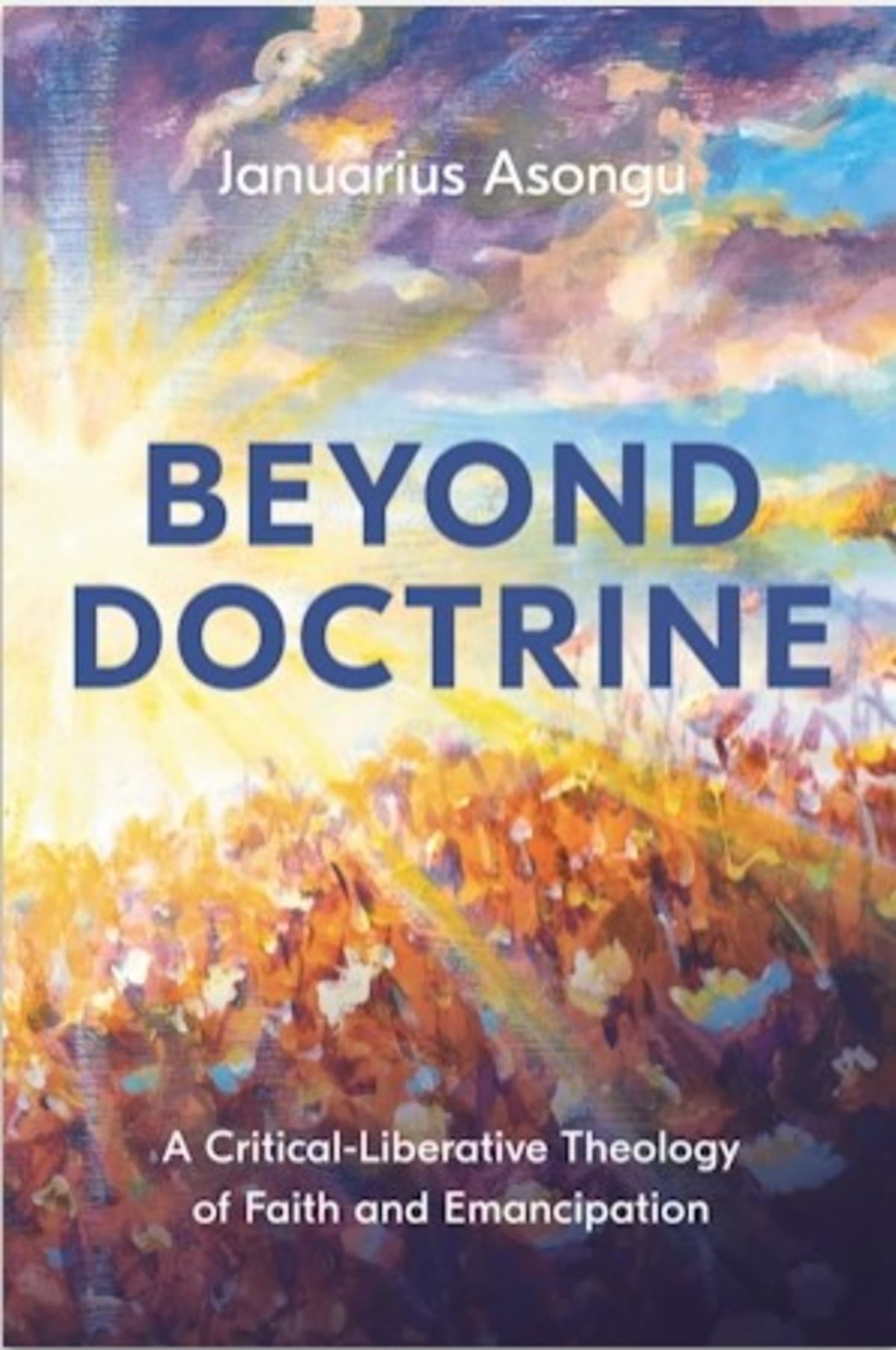
By Januarius Asongu, Author of Beyond Doctrine
There are moments in history when silence becomes complicity. This is one of those moments. American Christianity now stands at a crossroads—not merely political, but spiritual. The question before us is not about party affiliation. It is about lordship. It is about whether Christians will follow Jesus Christ or bow, knowingly or unknowingly, before the idol of political power.
Scripture is unambiguous. Jesus declares in Matthew 6:24: “No one can serve two masters. You cannot serve God and Mammon.” Mammon is not merely money; it is the entire system of power, security, and domination that tempts human beings to place their trust in earthly authority rather than divine truth. Whenever political movements demand unquestioning loyalty, whenever they cultivate fear of the stranger, whenever they elevate national greatness above human dignity, they ask Christians to render unto Caesar what belongs to God alone.
Christ himself was a refugee. His family fled political violence under Herod (Matthew 2:13–15). How then can Christians support policies rooted in hostility toward migrants, asylum seekers, and the vulnerable? Jesus leaves no ambiguity in Matthew 25:40: “Whatever you did for the least of these brothers and sisters of mine, you did for me.” To demean the vulnerable is to demean Christ. To exclude the stranger is to exclude Christ. To build political identity upon exclusion is to crucify Christ anew in our time.
Christian nationalism, in all its forms, is a theological contradiction. The Kingdom of God is not a nation-state. Jesus explicitly rejected political messianism. When offered worldly power, he refused it (Matthew 4:8–10). When Peter drew the sword in defense of Christ, Jesus rebuked him: “Put your sword back in its place, for all who take the sword will perish by the sword” (Matthew 26:52). Christ’s kingdom advances not through domination, but through truth, sacrifice, and love.
In Beyond Doctrine: A Critical-Liberative Theology of Faith and Emancipation, I argue that the ultimate test of Christian faith is not doctrinal conformity but moral alignment with truth, justice, and human dignity. Christianity ceases to be Christianity when it becomes a vehicle for fear, exclusion, or domination. Faith is not validated by how loudly one proclaims Christ’s name, but by how faithfully one embodies Christ’s character. As Scripture warns in Titus 1:16: “They profess to know God, but they deny him by their works.”
The prophets of Israel understood this danger well. They warned against confusing religious identity with moral righteousness. In Isaiah 10:1–2, the prophet condemns those who enact unjust laws and deprive the vulnerable of their rights. God’s judgment falls not only upon private sin but upon unjust political systems. Christians cannot absolve themselves by retreating into personal piety while supporting public injustice.
Perhaps the gravest spiritual danger today is the normalization of falsehood. Jesus declared, “I am the way, the truth, and the life” (John 14:6). Truth is not optional in Christianity. It is foundational. When Christians knowingly embrace falsehood for political gain, they do not merely commit a political error; they commit a spiritual betrayal.
The early Christians understood that their allegiance to Christ transcended empire. They refused to worship Caesar, even when it cost them their lives. They understood that faithfulness to Christ required resistance to political idolatry. Their courage gave birth to a faith that transformed the world.
That same choice confronts Christians today.
We must decide whether Christianity will remain a prophetic witness or become a servant of political power. We must decide whether Christ is truly Lord, or merely a symbol invoked to sanctify earthly authority.
Joshua’s words echo across the centuries with renewed urgency: “Choose this day whom you will serve” (Joshua 24:15).
Christ or power. Truth or tribalism. Love or fear.
We cannot serve both.