By Januarius Asongu, PhD
Abstract
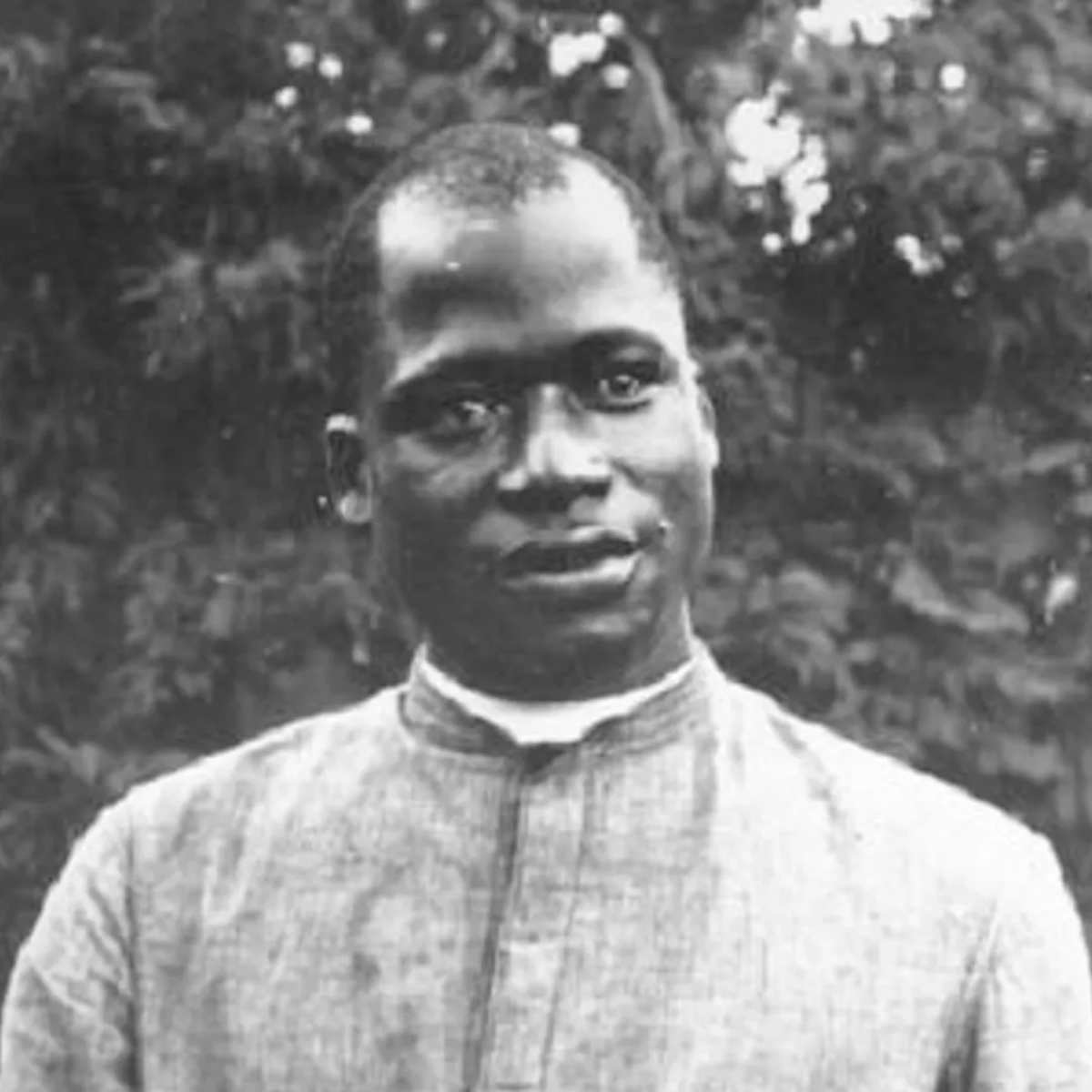
The life and missionary witness of Father Simon Mpeke (1906–1975), affectionately known throughout northern Cameroon as Baba Simon ("Father Simon" or "Papa Simon"), occupies a unique place in the history of African Catholicism. Widely recognized as one of the first indigenous Cameroonian Catholic priests and the first Cameroonian secular missionary to dedicate his life to the evangelization of the Kirdi peoples of the Far North, Simon Mpeke pioneered a model of mission that integrated evangelization with human development, interreligious dialogue, cultural respect, and profound solidarity with marginalized communities. Although his sanctity has increasingly received ecclesiastical recognition through his declaration as Venerable by Pope Francis in 2023, the wider ecclesiological significance of his missionary legacy has received comparatively little scholarly attention. This article argues that Baba Simon's greatest contribution extends beyond the conversion of individuals or the establishment of Christian communities. Rather, he helped initiate an indigenous missionary movement whose fruits are visible today in the maturation of the Catholic Church in northern Cameroon and in the reciprocal exchange of ecclesial leadership between Cameroon's coastal dioceses and the once distant missionary territories of the Far North.
Building upon contemporary scholarship in African missiology, the theology of mission, and the emerging literature on reverse mission, this article proposes the concept of ecclesial reciprocity to describe the process through which missionary Churches eventually become recipients of the gifts of the very communities they once evangelized. The appointment of Archbishop Samuel Kleda—a native of Cameroon's Far North—as Archbishop of Douala, the archdiocese that once sent Simon Mpeke as a missionary, symbolizes this remarkable historical reversal. The article further explores the influence of Baba Simon on the theological imagination of Jean-Marc Ela, whose contextual theology emerged from the pastoral landscape first cultivated by Simon Mpeke. Finally, drawing upon the author's own pastoral experience in the Diocese of Yagoua and his previous scholarship on reverse mission and global Catholicism, the essay argues that Baba Simon's missionary vision continues to shape the identity of the Catholic Church in Cameroon and offers an enduring model for the universal Church in an era increasingly characterized by multidirectional missionary exchange.
Keywords: Baba Simon, Simon Mpeke, Cameroon, Catholic Church, mission, reverse mission, Jean-Marc Ela, ecclesial reciprocity, African theology, missiology, Critical Synthetic Realism
1. Introduction
History occasionally produces lives whose significance cannot be measured solely by the events they directly shaped. Their true importance becomes visible only decades later, when subsequent generations recognize that entire institutions, traditions, and ways of thinking have quietly emerged from seeds planted by a single individual. Such is the case of Father Simon Mpeke (1906–1975), better known throughout northern Cameroon as Baba Simon, a title of affection meaning "Father Simon" or "Papa Simon" in local usage. More than fifty years after his death, his memory continues to animate Christian communities across Cameroon's Far North, where his portrait remains a familiar presence in parish churches, schools, health centers, and pastoral institutions. His missionary witness has become part of the collective memory of a local Church that increasingly understands itself through the example of the man who first chose to make its joys, struggles, and aspirations his own.
Simon Mpeke occupies a singular position in Cameroonian ecclesiastical history. Born in Batombé near Edéa around 1906, baptized in 1918, and ordained on 8 December 1935 as a member of the first generation of indigenous Cameroonian Catholic priests, he initially exercised his priestly ministry within what would later become the Archdiocese of Douala. His pastoral gifts quickly became evident through his work in parish ministry, Catholic Action, education, and the promotion of lay apostolates. Yet it was precisely at the height of this promising ministry that he discerned a radically different vocation. Inspired by the missionary spirituality of Charles de Foucauld and the ecclesial vision articulated in Pope Pius XII's encyclical Fidei Donum (1957), Simon Mpeke volunteered to leave the relative stability of Douala and dedicate himself to the evangelization of the peoples of Cameroon's Far North (Pius XII, 1957; Lekelefac, 2023).
At first glance, this decision might appear to be merely another example of missionary generosity. Yet history has revealed it to be something considerably more significant. Simon Mpeke did not simply establish parishes or baptize converts. He helped lay the foundations for the emergence of a mature local Church capable not only of sustaining itself but also of contributing to the wider mission of Catholicism within Cameroon and beyond. His apostolate anticipated what the Second Vatican Council would later articulate in Ad Gentes: that missionary activity seeks the formation of local Churches possessing their own clergy, leadership, theological reflection, and missionary dynamism (Second Vatican Council, 1965).
The historical symbolism of this maturation is perhaps nowhere more evident than in the present leadership of the Church in Cameroon. Decades after Simon Mpeke left the Archdiocese of Douala to proclaim the Gospel among the Kirdi peoples of the Far North, the same metropolitan see is today shepherded by Archbishop Samuel Kleda, himself a son of northern Cameroon. The significance of this development extends far beyond episcopal appointments. It represents the completion of an ecclesial journey in which the former mission territory has itself become a source of leadership for the Church that originally commissioned the missionary. Mission has become reciprocal. The evangelized have become evangelizers. The receiver has become a giver.
Surprisingly, this remarkable historical development has attracted relatively little scholarly attention. Existing literature has understandably emphasized Simon Mpeke's heroic virtues, his spirituality of poverty, his pastoral innovations, his commitment to human development, and his reputation for holiness (Ela, 1982; Lekelefac, 2023). Yet far less consideration has been given to the ecclesiological implications of his life's work. What does Simon Mpeke reveal about the maturation of indigenous Churches? How should his missionary legacy be interpreted in light of contemporary discussions surrounding World Christianity, reverse mission, and the shifting geographical center of global Catholicism? In what sense did his apostolate prepare the intellectual environment within which Jean-Marc Ela would later emerge as one of Africa's most influential theologians? And how might his life illuminate the future of missionary activity in an increasingly polycentric Church?
This article argues that Simon Mpeke's greatest legacy lies precisely in this neglected ecclesiological dimension. His life illustrates what this study describes as ecclesial reciprocity: the process by which missionary activity matures into a reciprocal exchange of gifts between Churches, such that communities once regarded as recipients of evangelization become active contributors to the life, leadership, and renewal of the wider Church. This argument builds upon recent scholarship concerning reverse mission and the multidirectional character of contemporary Christianity while extending these discussions inward, demonstrating that similar processes unfolded within Cameroon long before African missionaries began revitalizing European Christianity (Asongu, 2024, 2025).
The discussion proceeds in five stages. It first reconstructs the historical context of Simon Mpeke's missionary vocation and examines the distinctive characteristics of his pastoral method. It then considers his influence on the emergence of contextual African theology through the work of Jean-Marc Ela. The third section explores the remarkable growth of Catholicism in Cameroon's Far North and argues that this development constitutes one of the clearest examples of indigenous ecclesial maturation in modern African Church history. Building upon these observations, the article develops the concept of ecclesial reciprocity and situates it within contemporary missiology and the theology of reverse mission. Finally, drawing upon both historical evidence and personal pastoral experience in the Diocese of Yagoua, the article reflects on Baba Simon's continuing significance for the Catholic Church in Cameroon and offers a theological rationale for wholehearted support of his beatification.
In many respects, Simon Mpeke's story is no longer simply the biography of an extraordinary missionary. It has become the story of the Catholic Church in Cameroon itself—a Church that has moved from receiving missionaries to sending them, from dependence to maturity, and from mission territory to missionary Church. Understanding that transformation requires returning to the remarkable life of the priest whom generations of Christians and Muslims alike came to know simply as Baba Simon.
2. Simon Mpeke and the Birth of an Indigenous Missionary Vision
The history of Catholicism in Cameroon has often been narrated through the activities of European missionary congregations—the Holy Ghost Fathers, the Mill Hill Missionaries, the Pallottines, and later the Oblates of Mary Immaculate, among others. These missionary societies undoubtedly laid the institutional foundations of the Church, establishing schools, seminaries, hospitals, and parishes that transformed the religious landscape of the country. Yet by the middle of the twentieth century, a new chapter in Cameroonian Catholicism was beginning to unfold. Indigenous clergy were no longer merely recipients of missionary formation; they were becoming missionaries in their own right. No figure symbolizes this transition more completely than Father Simon Mpeke.
Born around 1906 in Batombé, near Edéa, to non-Christian parents, Simon Mpeke's early life coincided with one of the most turbulent periods in Cameroon's colonial history. German rule had given way to French administration following the First World War, while Catholic missionary activity itself underwent significant institutional reorganization. Baptized on 14 August 1918 after years of catechetical instruction, the young Simon initially worked as a schoolteacher before discerning a vocation to the priesthood (Lekelefac, 2023).
His vocation itself was remarkable. At a time when the indigenous priesthood remained in its infancy, many African Catholics still regarded ordination as an almost unattainable aspiration. Simon himself reportedly recalled the transformative realization that "a Black could become a priest." That simple discovery altered not only the course of his own life but, indirectly, the religious history of Cameroon. Breaking off an arranged marriage, he entered the newly established seminary at Yaoundé in 1924 and became one of the first eight indigenous Cameroonian priests ordained on 8 December 1935 (Lekelefac, 2023).
The significance of this first generation of indigenous clergy cannot be overstated. They represented a decisive moment in the gradual Africanization of the Catholic Church. For decades, the Church in Cameroon had depended overwhelmingly upon European missionaries whose commitment and sacrifice were immense but whose ministry inevitably reflected the structures of colonial mission. Indigenous priests introduced a different dynamic. They understood local cultures intuitively, navigated linguistic diversity with greater ease, and embodied the possibility that Christianity could become genuinely African rather than merely transplanted from Europe.
Simon Mpeke's early priesthood reflected this promise. After serving in rural missions, he was assigned to New Bell Parish in Douala, one of the largest and most dynamic Catholic communities in the country. His pastoral ministry demonstrated extraordinary energy. He promoted Catholic Action movements, encouraged lay participation, strengthened educational initiatives, and became known for remarkable personal generosity toward the poor. Those who encountered him consistently remarked upon the combination of contemplative spirituality and practical pastoral commitment that characterized his ministry (Lekelefac, 2023).
Yet even during these productive years, Simon experienced a growing interior restlessness. Parish success alone could not satisfy what he increasingly perceived as a missionary vocation. During the early 1950s, his encounter with the spirituality of Charles de Foucauld proved decisive. Foucauld's radical identification with marginalized peoples, his spirituality of hiddenness, and his conviction that evangelization begins through presence rather than domination profoundly reshaped Simon's understanding of priestly ministry. Joining the Jesus-Caritas priestly fraternity, he embraced a spirituality centered upon poverty, fraternity, contemplation, and humble witness rather than institutional prestige (de Foucauld, 1978; Voillaume, 1964).
This spiritual transformation coincided providentially with one of the most important developments in twentieth-century Catholic missiology. In 1957, Pope Pius XII issued the encyclical Fidei Donum, calling diocesan priests throughout the world to volunteer for missionary service beyond the boundaries of their own dioceses. The encyclical represented a theological turning point. Mission was no longer to be understood primarily as the responsibility of missionary religious congregations; every local Church was invited to become missionary by sharing its clergy with regions of greater pastoral need (Pius XII, 1957).
Although Fidei Donum has often been discussed in relation to European priests serving in Africa, Simon Mpeke embodied an equally significant but less frequently acknowledged dimension of its vision. Rather than crossing continents, he crossed internal frontiers. He became one of the first Cameroonian diocesan priests to leave his own ecclesiastical jurisdiction voluntarily in order to evangelize fellow Cameroonians living in a region that remained religiously and culturally distant from the established Catholic communities of the coast. In doing so, he transformed Fidei Donum into an indigenous missionary project.
This distinction deserves emphasis. Simon Mpeke was not simply an African participating in a European missionary enterprise. He was inaugurating a genuinely African missionary movement within Africa itself. Long before scholars began speaking of "mission in six continents," "South-to-South mission," or "polycentric Christianity," Simon had already demonstrated that African Churches possessed both the responsibility and the capacity to evangelize one another. His missionary journey anticipated later developments in World Christianity by several decades.
His destination further underscores the magnitude of his decision. The Far North of Cameroon occupied a distinctive place within the country's religious geography. Islam had become deeply rooted through centuries of Fulani expansion, while numerous non-Muslim ethnic communities—collectively designated by the Hausa-derived term Kirdi—maintained rich indigenous religious traditions. Historically marginalized both politically and economically, these communities had experienced slave raids, cultural isolation, and limited access to education and healthcare. Evangelization in such a context required far more than preaching. It demanded the patient reconstruction of social relationships, economic opportunities, and human dignity itself.
Simon Mpeke understood this instinctively.
Unlike many missionaries of earlier generations, he refused to define mission narrowly in terms of sacramental expansion or institutional growth. His understanding of evangelization was profoundly holistic. To proclaim Christ required entering into the concrete realities of people's lives. Schools became acts of evangelization. Agricultural development became evangelization. Health care became evangelization. Defending the poor became evangelization. Human promotion was not a secondary consequence of missionary work; it was one of its essential expressions.
In this respect, Simon anticipated what would later become a defining feature of postconciliar Catholic social teaching. Pope Paul VI would famously insist that "between evangelization and human advancement there are profound links" (Evangelii Nuntiandi, §31), while Pope Benedict XVI would later describe authentic evangelization in Africa as inseparable from the promotion of reconciliation, justice, and peace (Africae Munus, §80). Simon Mpeke had already embodied these principles years before they received formal magisterial articulation.
Equally remarkable was his relationship with Islam. Rather than viewing Muslims primarily as opponents in religious competition, Simon cultivated friendships with Muslim leaders and pursued genuine dialogue grounded in mutual respect. According to numerous accounts, it was Muslims as much as Christians who affectionately bestowed upon him the title Baba Simon, recognizing in him not merely a Christian missionary but a father to the entire community (Lekelefac, 2023).
This reputation reveals something essential about his missionary method. Simon did not begin with theological polemics. He began with presence. Before people listened to his preaching, they had already witnessed his compassion. Before they debated doctrine, they had experienced solidarity. His authority emerged less from ecclesiastical office than from the credibility of a life shared with the people he served.
It is therefore no accident that one of Cameroon's greatest theologians, Jean-Marc Ela, would later emerge from this very ecclesial environment. Ela's theology of presence among the poor, his insistence that Christian reflection must begin from the lived experience of marginalized communities, and his critique of detached ecclesiastical structures all developed within a pastoral landscape first cultivated by Baba Simon. While Ela and Simon differed in temperament and intellectual style, they shared a fundamental conviction: the Church discovers Christ most authentically when it chooses to dwell among those whom society neglects.
Understanding that relationship requires moving beyond biography to theology. Simon Mpeke did not simply establish Christian communities in the Far North. He created the pastoral conditions under which one of Africa's most influential theological voices could emerge. In many respects, Jean-Marc Ela became the interpreter of a missionary vision that Simon Mpeke had first embodied through his life.
3. Baba Simon and Jean-Marc Ela: From Missionary Praxis to African Theology
One of the most overlooked dimensions of Baba Simon's legacy is his indirect yet profound influence on the development of modern African theology through the work of Jean-Marc Ela (1936–2008). While Simon Mpeke has often been remembered as a missionary and pastoral innovator, and Ela as a sociologist, theologian, and public intellectual, the historical relationship between the two deserves much closer scholarly attention. Indeed, it may be argued that Baba Simon helped create the ecclesial and pastoral environment within which one of Africa's most original theological minds would eventually flourish.
Jean-Marc Ela occupies a distinguished place within twentieth-century African theology. Alongside theologians such as Bénézet Bujo, Engelbert Mveng, Charles Nyamiti, Laurenti Magesa, and Kä Mana, Ela sought to rethink Christian theology from the lived realities of African communities rather than from abstract theological systems transplanted from Europe. His writings consistently challenged the Church to become a genuine companion of the poor, insisting that theology must emerge not merely from academic libraries but from villages, farms, marketplaces, refugee camps, and marginalized communities (Ela, 1986, 1994).
Yet theological ideas rarely emerge in isolation. They are usually preceded by concrete pastoral experiences that provide the questions to which theology later attempts to formulate answers. In the case of Jean-Marc Ela, one of those formative experiences was his ministry in Tokombéré, where the enduring memory and pastoral vision of Baba Simon remained deeply embedded in the life of the local Church.
Although Ela developed his own distinctive theological voice, the continuity between the two men is striking.
Both rejected triumphalist models of mission.
Both insisted upon the inseparability of evangelization and human liberation.
Both believed that the credibility of the Gospel depended upon the Church's willingness to share the conditions of life experienced by the poor.
Both understood dialogue—not domination—as the proper Christian posture toward adherents of other religious traditions.
Above all, both viewed missionary presence itself as a theological act.
For Baba Simon, this conviction was expressed through a life of radical simplicity. He deliberately embraced poverty, choosing to live among the Kirdi rather than above them. His missionary authority rested not upon institutional privilege but upon proximity. He became known as the "barefoot missionary" not because poverty romanticized suffering but because he intentionally removed every unnecessary social distance separating himself from the people entrusted to his care (Lekelefac, 2023).
Ela transformed this pastoral intuition into theological language.
Throughout works such as My Faith as an African and African Cry, he argued that authentic Christian theology must begin from what he called the "village theology" of ordinary African believers rather than from imported conceptual frameworks detached from African realities (Ela, 1986, 1994). The Church, he insisted, must become a community that listens before it teaches, accompanies before it governs, and serves before it commands.
The resemblance is unmistakable.
Simon Mpeke practiced what Ela later theorized.
Simon embodied what Ela explained.
Simon lived what Ela wrote.
This observation should not be interpreted as diminishing Ela's originality. Rather, it situates his theological creativity within the broader ecclesial history of northern Cameroon. Theology does not arise in a vacuum. It grows from pastoral experience, ecclesial practice, and historical memory. In that sense, Baba Simon belongs not only to the history of Cameroonian missions but also to the intellectual genealogy of African theology.
This relationship also helps explain why Tokombéré became such a fertile environment for theological innovation. By the time Ela began his ministry there, Simon Mpeke had already demonstrated that evangelization could no longer be understood simply as the expansion of ecclesiastical institutions. Mission had become an encounter between cultures, an exercise in human solidarity, and a witness to the dignity of marginalized peoples. Ela inherited a Church already transformed by that missionary imagination.
Consequently, when Ela criticized forms of Christianity that remained excessively clerical, Eurocentric, or socially disengaged, he was not rejecting missionary Catholicism itself. Rather, he was extending one of its finest indigenous expressions. His theological reflections represented less a rupture with Baba Simon than their intellectual maturation.
Indeed, one could plausibly argue that Simon Mpeke accomplished pastorally what Ela later articulated theologically.
The former built communities.
The latter interpreted their significance.
The former demonstrated that African communities possessed theological agency.
The latter explained why that agency mattered for the universal Church.
This continuity becomes even more significant when viewed within the wider history of Catholicism after the Second Vatican Council. Vatican II emphasized that every local Church possesses gifts to offer the universal Church (Lumen Gentium, 1964; Ad Gentes, 1965). African theology subsequently became one of those gifts, contributing new insights into inculturation, liberation, reconciliation, community, and ecclesiology. Scholars often attribute this development primarily to theologians themselves. Yet theologians require living ecclesial communities within which theological questions emerge.
Simon Mpeke helped build precisely those communities.
Without the missionary transformation of the Far North, it is difficult to imagine the theological landscape from which Ela's reflections eventually emerged.
For this reason, Baba Simon's influence should not be measured solely by the number of churches he established, schools he founded, or villages he visited. His legacy also includes the intellectual traditions his ministry helped make possible. His missionary witness contributed indirectly to one of the most creative periods in African Catholic theology during the second half of the twentieth century.
This observation invites a broader reconsideration of missionary history itself. Historians often distinguish sharply between missionaries and theologians, as though one builds institutions while the other produces ideas. The relationship between Simon Mpeke and Jean-Marc Ela suggests a much richer reality. Missionary practice and theological reflection exist in constant dialogue. Faithful pastoral ministry creates the experiences that theology later interprets, while theology, in turn, deepens and refines pastoral practice.
In the case of northern Cameroon, Baba Simon and Jean-Marc Ela together represent two complementary moments within a single ecclesial tradition. Simon established the pastoral foundations. Ela provided their theological interpretation. Together, they helped shape one of the most remarkable chapters in the history of African Catholicism.
Recognizing this continuity also strengthens the argument advanced in this article. Simon Mpeke's enduring legacy cannot be confined to the category of personal holiness alone. His life generated institutional, pastoral, intellectual, and theological consequences that continue to influence the Church decades after his death. His beatification, therefore, would recognize not merely the sanctity of an individual priest but the enduring vitality of a missionary vision that helped transform both the practice of evangelization and the theological self-understanding of the Church in Cameroon.
The fullest expression of that missionary vision, however, lies not only in the emergence of African theology but in the remarkable maturation of the local Church itself. Over the course of six decades, the communities that Baba Simon served evolved from missionary frontier into one of the most vibrant regions of Cameroonian Catholicism. It is to that extraordinary ecclesial transformation that we now turn.
4. From Mission Territory to Missionary Church: The Maturation of Catholicism in Cameroon's Far North
One of the enduring weaknesses of missionary historiography has been its tendency to evaluate missionary success primarily through immediate and quantifiable indicators: the number of baptisms performed, churches constructed, schools established, or clergy ordained. While such measures remain important, they often fail to capture the deeper ecclesiological transformation that authentic missionary activity seeks to accomplish. The Second Vatican Council fundamentally reoriented Catholic missiology by emphasizing that the ultimate goal of mission is not perpetual dependence upon missionary personnel but the emergence of mature local Churches capable of assuming responsibility for their own evangelizing mission (Second Vatican Council, 1965).
Measured against this standard, Simon Mpeke's missionary vocation must be regarded as one of the most remarkable success stories in the history of the Catholic Church in Cameroon.
When Simon Mpeke arrived in the Far North in 1959, he entered a region that many regarded as one of the most difficult missionary frontiers in French-speaking Africa. The territory was geographically remote, economically marginalized, religiously diverse, and culturally distant from the Catholic communities that had flourished along Cameroon's Atlantic coast. Islam had exercised significant political and cultural influence for centuries through the Fulani emirates, while numerous non-Muslim ethnic communities collectively designated as the Kirdi preserved complex religious traditions and social structures that had evolved long before the arrival of Christianity.
The missionary challenges confronting Simon were therefore multidimensional.
He faced poverty.
He encountered illiteracy.
He confronted inadequate health care.
He ministered amid fragile infrastructure.
He entered communities whose historical experience included slavery, marginalization, and political neglect.
To many observers, northern Cameroon appeared to be a peripheral mission field—a place receiving assistance from elsewhere rather than contributing to the wider life of the Church.
History would prove that assumption profoundly mistaken.
Rather than imposing externally designed pastoral models, Simon adopted what contemporary missiology would recognize as an incarnational approach. He entered the social world of the people themselves. He learned from them before attempting to teach them. He accepted the rhythms of village life. He traveled tirelessly through communities often inaccessible by conventional transportation. His missionary strategy was based less upon institutional expansion than upon personal presence.
This pastoral method profoundly influenced the character of the Church that eventually emerged in the region.
Instead of developing an ecclesial culture dependent upon external direction, northern Catholicism gradually acquired characteristics of resilience, participation, and local leadership. Catechists assumed central pastoral responsibilities. Indigenous vocations increased. Parish life became deeply integrated into community development. Schools, agricultural initiatives, medical services, women's associations, youth movements, and interreligious cooperation became ordinary features of ecclesial life rather than peripheral charitable activities.
In many respects, the Church that developed in the Far North exemplified what Pope Paul VI would later describe as an evangelizing community whose proclamation of the Gospel necessarily includes the transformation of human life in all its dimensions (Paul VI, 1975).
This development was neither accidental nor merely administrative.
It reflected Simon Mpeke's theological understanding of mission itself.
For Simon, Christianity was never simply about changing religious affiliation.
It was about restoring human dignity.
The Muslim leader who reportedly described misery as "the enemy of God" expressed a conviction that Simon himself embodied throughout his ministry (Lekelefac, 2023). Poverty was not romanticized. It was confronted. Illiteracy was not accepted as inevitable. It was challenged through education. Social exclusion was not tolerated. It was overcome through fraternity. Evangelization and human flourishing formed two inseparable dimensions of a single missionary vocation.
Long before Catholic missiology adopted the language of "integral human development," Simon Mpeke had already made it the practical foundation of his ministry.
The long-term consequences of this vision became increasingly visible after his death in 1975.
Over subsequent decades, Catholic institutions multiplied throughout the Far North. New dioceses matured. Indigenous clergy assumed increasing pastoral responsibility. Religious vocations flourished. Lay leadership expanded. The once fragile missionary outposts gradually became stable local Churches possessing their own institutional memory, pastoral priorities, and missionary confidence.
The significance of this transformation extends well beyond Cameroon.
Scholars such as Andrew Walls (1996), Lamin Sanneh (2003), and Kwame Bediako (1995) have argued that one of the defining characteristics of modern Christianity has been the geographical relocation of its demographic and spiritual center from Europe toward Africa, Asia, and Latin America. Christianity has increasingly become polycentric. Former mission territories have become centers of theological creativity, ecclesial vitality, and missionary initiative.
The history of northern Cameroon illustrates precisely this broader phenomenon, albeit on a national rather than continental scale.
Within Cameroon itself, the ecclesial center of gravity has gradually become more widely distributed. The Far North is no longer understood merely as a recipient of missionaries. It has become an active contributor to the life of the national Church. Its priests serve in dioceses across the country. Its religious congregations continue to expand. Its pastoral experience increasingly informs national conversations concerning evangelization, interreligious dialogue, social justice, and peacebuilding.
Perhaps no single event symbolizes this maturation more eloquently than the appointment of Archbishop Samuel Kleda as Archbishop of Douala.
Historical symbolism often speaks more powerfully than statistical analysis.
In 1959, a diocesan priest of Douala voluntarily left his flourishing coastal ministry to evangelize communities in the Far North.
Today, a son of the Far North serves as Archbishop of Douala, the metropolitan archdiocese that once commissioned Simon Mpeke's missionary vocation.
This is not simply an episcopal appointment.
It is an ecclesiological event.
The movement of leadership from the Far North to Douala demonstrates that mission has completed one full historical cycle. The Church that once gave now also receives. The region that once depended upon missionary generosity now enriches the Church that originally nurtured its growth.
Such reciprocity reflects one of the deepest convictions of Catholic ecclesiology.
No local Church permanently occupies the position of benefactor while another remains forever dependent. Every authentic local Church eventually becomes both giver and receiver. As Pope John Paul II repeatedly emphasized, the exchange of gifts among local Churches constitutes an essential expression of catholicity itself (John Paul II, 1995).
This historical development also challenges lingering assumptions inherited from colonial models of mission.
Traditional missionary narratives frequently imply movement in only one direction: from established Churches toward younger Churches. Contemporary World Christianity increasingly rejects this linear understanding. Mission has become multidirectional. African priests minister throughout Europe. Asian missionaries evangelize North America. Latin American religious communities establish missions across Africa.
Yet the Cameroonian experience reveals that this multidirectional reality did not begin only with globalization.
It first unfolded within Cameroon itself.
Simon Mpeke's missionary journey from Douala to the Far North eventually made possible an ecclesial movement in the opposite direction. The exchange of missionary gifts occurred internally before it became global.
This observation invites a conceptual refinement of contemporary missiology.
The growing literature on reverse mission has generally focused upon the movement of missionaries from the Global South to historically Christian societies in Europe and North America (Asamoah-Gyadu, 2005; Freston, 2010). Valuable though this scholarship is, it risks overlooking analogous processes occurring within national Churches themselves.
The Cameroonian case suggests a broader phenomenon.
Mission does not simply reverse.
Mission matures.
When it matures, reciprocity replaces dependency.
The former missionary territory becomes an equal participant in the Church's common mission.
The former sender becomes a recipient.
The former recipient becomes a sender.
It is precisely this process that this article designates as ecclesial reciprocity.
This concept does not replace reverse mission but complements it. Whereas reverse mission describes the geographical reversal of missionary flows, ecclesial reciprocity describes the theological maturity achieved when local Churches exchange gifts as equals within the communion of the universal Church.
Viewed through this lens, Simon Mpeke appears not merely as the Apostle of the Kirdi or the founder of a regional missionary movement. He emerges instead as one of the earliest architects of an ecclesial transformation whose significance extends far beyond northern Cameroon. His ministry anticipated one of the defining characteristics of twenty-first-century Catholicism: the emergence of a genuinely polycentric Church in which missionary initiative, theological creativity, and ecclesial leadership circulate among local Churches rather than flowing exclusively from traditional centers of authority.
This insight also provides an illuminating bridge to the broader phenomenon of reverse mission that has increasingly occupied theological reflection in recent decades. Indeed, the Cameroonian experience suggests that the Church's contemporary missionary future may already have been foreshadowed in Baba Simon's extraordinary life several decades earlier.
5. Reverse Mission and Ecclesial Reciprocity: Baba Simon's Legacy in the Twenty-First Century
During the past three decades, one of the most significant developments in the study of World Christianity has been the emergence of the concept of reverse mission. Originally employed to describe the growing phenomenon of missionaries from Africa, Asia, and Latin America evangelizing historically Christian societies in Europe and North America, the concept reflects the dramatic demographic and spiritual relocation of Christianity's center of gravity from the Global North to the Global South (Jenkins, 2002; Walls, 1996; Sanneh, 2003). Churches that once received missionaries have themselves become missionary Churches, sending priests, religious, and lay missionaries throughout the world.
The rapid expansion of African Catholicism has become one of the most striking manifestations of this transformation. African priests now serve in dioceses across Europe and North America, while African bishops increasingly participate in shaping theological conversations within the universal Church. This reversal has challenged long-standing assumptions that missionary activity naturally proceeds in one direction—from established Christian societies toward supposedly younger Churches.
Yet the Cameroonian experience invites an important refinement of this discussion.
Reverse mission did not begin only when African priests arrived in Paris, London, Rome, or New York.
Nor did it begin when European churches experienced declining vocations.
Rather, one of its earliest expressions can be found within Cameroon itself.
This article proposes that the missionary history initiated by Baba Simon represents an early example of what may be called internal ecclesial reciprocity—a process through which missionary activity within a national Church eventually produces reciprocal exchanges of leadership, pastoral experience, theological insight, and missionary initiative among its own local Churches.
The distinction is important.
The existing literature on reverse mission generally emphasizes geographical reversal.
This article argues for an ecclesiological reversal.
Mission reaches maturity not simply when missionaries travel in the opposite direction, but when every local Church becomes simultaneously missionary and missioned, evangelizer and evangelized, giver and receiver.
Such reciprocity lies at the very heart of Catholic ecclesiology.
The Second Vatican Council repeatedly rejected any understanding of particular Churches as permanently dependent upon others. Instead, every local Church, once firmly established, contributes its own distinctive gifts to the communion of the universal Church (Second Vatican Council, 1964, 1965). Pope John Paul II further developed this vision by insisting that missionary activity belongs to the entire People of God and that the younger Churches increasingly assume responsibility for evangelization both within and beyond their own territories (John Paul II, 1990, 1995).
Baba Simon's life anticipated precisely this ecclesial dynamic.
When Simon Mpeke left Douala for the Far North in 1959, his movement appeared entirely conventional. An established diocese was sending one of its priests to a region where Catholicism remained relatively fragile.
From the perspective of history, however, that movement represented only the first half of a much larger narrative.
Over the following decades, the Church of the Far North gradually acquired its own clergy, religious communities, educational institutions, theological voices, and pastoral traditions. It became not merely a recipient of missionary generosity but an active participant in the evangelizing mission of the Church.
The appointment of Archbishop Samuel Kleda vividly symbolizes this transformation.
Here, history assumes almost sacramental proportions.
A priest formed in the Church of Douala traveled north to evangelize.
Decades later, a son of the Far North became Archbishop of Douala.
The historical movement is not circular in the sense of returning to its point of origin unchanged. Rather, it resembles what theologians might describe as a spiral of grace. The Church returns to its origins enriched by the gifts that emerged from its own missionary generosity.
Mission, therefore, proves fundamentally reciprocal.
This insight resonates strongly with recent developments in the theology of World Christianity. Lamin Sanneh (2003) argued that Christianity possesses an extraordinary capacity for cultural translation. Unlike religious traditions tied to one sacred language or civilization, Christianity continually becomes indigenous wherever it takes root. Andrew Walls (1996) similarly described Christianity as both a pilgrim faith and an indigenizing faith—a religion that simultaneously transcends and inhabits every culture.
Baba Simon instinctively understood this long before these theoretical frameworks became widely influential.
He did not seek to create miniature versions of Douala in the Far North.
Nor did he attempt to reproduce European Catholicism within Kirdi communities.
Instead, he sought to accompany local communities as they themselves became fully Catholic without ceasing to be authentically African.
This distinction explains why his missionary legacy endured.
He planted a Church rather than an outpost.
He cultivated local leadership rather than permanent dependence.
He sought disciples rather than clients.
Consequently, the Church he helped establish eventually became capable of contributing its own pastoral wisdom to the wider Church.
This dynamic bears striking resemblance to developments now observable throughout global Catholicism.
European missionaries evangelized much of Africa during the nineteenth and twentieth centuries.
Today African priests revitalize aging European parishes.
North American missionary societies established seminaries across Africa.
Today African theologians contribute decisively to Catholic theological discourse.
The missionary relationship has become reciprocal.
Yet the Cameroonian experience demonstrates that this reciprocity is not merely an international phenomenon.
It also unfolds within individual nations.
The Far North now contributes bishops, priests, religious, scholars, and pastoral experience to dioceses across Cameroon.
The historical distinction between "mission territory" and "established Church" has gradually dissolved.
Every local Church now becomes both teacher and learner.
Both sender and receiver.
Both missionary and missioned.
This understanding also illuminates several themes developed in my own previous work on reverse mission and global Catholicism. I have argued elsewhere that the future of Christianity depends increasingly upon recognizing that missionary vitality no longer flows unilaterally from traditional ecclesiastical centers but emerges through reciprocal exchanges among diverse local Churches (Asongu, 2024a, 2024b, 2025). The Cameroonian experience offers a compelling historical case study supporting this thesis.
Indeed, Baba Simon may be regarded as one of the earliest practical architects of reverse mission—not because he himself traveled from Africa to Europe, but because he initiated the kind of ecclesial transformation that ultimately makes reverse mission possible. Before African Churches can evangelize the world, they must first become missionary among themselves. Simon Mpeke demonstrated exactly how such maturation occurs.
This perspective also sheds new light upon the contemporary significance of his beatification.
Beatification recognizes heroic virtue.
Canonization proposes exemplary discipleship.
Yet the universal Church often discovers that the saints become significant in ways extending beyond the circumstances of their own historical lives.
Saint Benedict did not intend to shape European civilization.
Saint Francis of Assisi did not foresee the global Franciscan movement.
Saint Charles de Foucauld never witnessed the worldwide influence of his spirituality.
Likewise, Simon Mpeke probably never imagined that the communities he patiently served would one day produce bishops, theologians, missionaries, and ecclesial leaders whose influence would extend throughout Cameroon and beyond.
History frequently grants saints a second vocation after death.
Their lives continue speaking through institutions they founded, communities they inspired, and generations they never lived to meet.
It is precisely in this sense that Simon Mpeke's missionary legacy remains unfinished.
His work continues wherever the Church embraces dialogue rather than domination.
Where evangelization is inseparable from human dignity.
Where local cultures become partners rather than obstacles.
Where mission is understood as reciprocal exchange rather than unilateral transmission.
His greatest miracle, therefore, may not consist in any extraordinary event attributed to his intercession.
It may instead consist in the remarkable ecclesial transformation that quietly unfolded because one humble priest chose to cross the cultural frontiers of his own country in obedience to the Gospel.
The theological significance of this legacy became especially tangible to me not through historical research alone but through my own encounter with the living Church of Cameroon's Far North. It is to that personal experience—and its implications for understanding Baba Simon's continuing influence—that I now turn.
6. A Personal Encounter with Baba Simon's Living Legacy: Reflections from the Diocese of Yagoua
Historical scholarship rightly values documentary evidence, archival research, and critical analysis. Yet there are moments when history is encountered not merely in documents but in living communities whose collective memory preserves the enduring presence of remarkable individuals. My own understanding of Baba Simon developed not only through reading his biography or studying the history of the Catholic Church in Cameroon, but also through a deeply formative pastoral experience in Cameroon's Far North.
Many years ago, I had the privilege of spending approximately one month in the Diocese of Yagoua through the generosity of Bishop Emmanuel Bushu, then Bishop of Yagoua. During that period, I served in Viri Parish, situated near the border between Cameroon and Chad. Although my stay was relatively brief, it profoundly altered my understanding of Catholicism in northern Cameroon.
What struck me immediately was that Baba Simon was everywhere.
His memory was not confined to diocesan archives or commemorative celebrations. His portrait adorned parish offices, churches, mission houses, catechetical centers, and pastoral institutions. Priests spoke of him with deep affection. Catechists referred to him with familiarity. Ordinary faithful mentioned him not as a distant historical figure but as someone whose life continued to shape the identity of their Church.
There are historical figures whose memory survives because institutions deliberately preserve it.
There are others whose memory survives because ordinary people refuse to forget them.
Baba Simon belongs unmistakably to the latter category.
This distinction is significant from both historical and theological perspectives. Institutional memory can be manufactured. Popular memory cannot. The continued reverence accorded to Baba Simon among Christians—and significantly, among many Muslims as well—suggests that his influence extends beyond ecclesiastical administration into the moral imagination of the region itself. Such enduring popular devotion helps explain why his cause for beatification has attracted such widespread support among the faithful.
For me personally, the experience proved transformative.
At the time, I did not yet appreciate fully how that brief pastoral immersion would later shape my own scholarly interests. Years afterward, as my research increasingly focused upon global Christianity, reverse mission, ecclesiology, and what I have described elsewhere as Critical Synthetic Realism, I gradually recognized that many of the questions occupying my own work had already been anticipated, in lived rather than theoretical form, by Baba Simon's missionary witness.
My scholarship on reverse mission has argued that Christianity in the twenty-first century must increasingly be understood through reciprocal exchanges among local Churches rather than through unilateral missionary movements flowing from historically dominant ecclesiastical centers (Asongu, 2024a, 2024b, 2025). This conviction arose principally from observing the remarkable transformation of global Christianity, particularly the growing missionary contribution of African Churches to Europe and North America.
Yet looking back, I now recognize that I had already witnessed a compelling illustration of this principle in northern Cameroon.
The Church I encountered in the Diocese of Yagoua did not perceive itself as a fragile mission dependent upon outside assistance. It possessed confidence, institutional maturity, indigenous leadership, and a strong missionary consciousness of its own. The ecclesial identity that I observed had been shaped, in no small measure, by the foundations laid decades earlier by Baba Simon.
Consequently, I have come to regard myself, however indirectly, as one of the many beneficiaries of his apostolate.
This statement is not merely autobiographical.
It carries broader theological significance.
Missionary influence cannot be measured only by direct conversions or immediate pastoral outcomes. Its true impact frequently extends across generations, influencing individuals who never personally encountered the missionary himself. Simon Mpeke died in 1975, years before my pastoral experience in Yagoua. Yet the ecclesial culture he helped create became one of the environments within which my own understanding of mission, theology, and the Catholic Church continued to develop.
In this respect, Baba Simon's missionary legacy exemplifies what Andrew Walls (1996) describes as the serial expansion of Christian history. Every generation inherits a Church shaped by the faithfulness of those who preceded it. The missionary's influence therefore extends beyond his own lifetime through the communities he forms and the traditions he establishes.
This continuity also resonates deeply with the methodological commitments of Critical Synthetic Realism (CSR). One of the central insights of CSR is that truth emerges not through fragmentation but through synthesis—through the integration of historical experience, cultural encounter, rational reflection, and lived practice (Asongu, 2026). Baba Simon's life illustrates precisely such integration.
He refused to separate contemplation from action.
He refused to separate evangelization from human development.
He refused to separate doctrine from compassion.
He refused to separate fidelity to Christ from respect for local cultures.
Nor did he accept the false opposition between Christian proclamation and interreligious dialogue.
His missionary practice consistently sought synthesis where others perceived contradiction.
From the perspective of CSR, Simon Mpeke appears not merely as an exemplary missionary but as a profoundly synthetic thinker in action. Although he left relatively few theological writings, his life itself constituted a coherent theological argument. His ministry demonstrated that authentic Christianity possesses the capacity to integrate truth and charity, proclamation and dialogue, fidelity and openness, universality and cultural particularity without collapsing into relativism or sectarianism.
Indeed, one could plausibly argue that Baba Simon practiced a form of synthetic missiology decades before such language entered theological discourse.
His ministry united dimensions of Christian life that modern scholarship frequently treats separately.
Mission and development.
Prayer and justice.
Inculturation and orthodoxy.
Dialogue and evangelization.
Personal holiness and structural transformation.
This integrated vision helps explain why his influence proved so enduring.
The Church remembers not only what its saints accomplished but how they accomplished it.
Methods rooted in domination generally disappear with changing political circumstances.
Methods rooted in humble accompaniment become traditions.
This insight also explains why Simon Mpeke's influence extended beyond the strictly religious sphere. His ministry contributed not only to the numerical growth of Catholicism but also to the cultivation of social trust, interreligious cooperation, educational opportunity, and communal solidarity. Such achievements acquire renewed relevance in a region that has, in recent decades, faced significant challenges arising from violent extremism, displacement, and insecurity. The continued invocation of Baba Simon's example amid these circumstances reflects the enduring conviction that authentic peace is built not merely through political arrangements but through communities formed in mutual respect and shared human dignity.
For these reasons, my support for Baba Simon's beatification extends beyond admiration for his personal holiness.
I support his beatification because I believe the universal Church needs his witness today.
In an age increasingly marked by religious polarization, he exemplifies dialogue without relativism.
In an era of persistent inequality, he embodies evangelization inseparable from human dignity.
In a Church becoming ever more global and polycentric, he demonstrates that authentic missionary activity always seeks to render itself unnecessary by forming mature local Churches capable of becoming missionaries themselves.
The Church has often canonized founders of religious orders, bishops, theologians, martyrs, and mystics.
Baba Simon reminds us of another path to sanctity.
The path of the missionary who quietly gives away his own ecclesial inheritance so completely that future generations scarcely remember where the mission began because the local Church has fully become its own.
That, perhaps, is the highest achievement any missionary can hope to leave behind.
The final task of this study, therefore, is to draw together these historical, theological, and autobiographical reflections in order to consider what Baba Simon's life reveals not only about the past of the Church in Cameroon but also about the future of Catholic mission in the twenty-first century.
7. Conclusion: From "Unbelievers" to Shepherds of the Church
The history of the Catholic Church is often narrated through the lives of great missionaries whose heroism transformed distant lands and unfamiliar peoples. Yet the deepest measure of missionary success is rarely found in statistics or institutional achievements. Rather, it is found in the emergence of communities that become fully capable of carrying the Gospel forward in their own voice, through their own leadership, and according to their own ecclesial gifts. Judged by this criterion, Father Simon Mpeke—Baba Simon—stands among the most significant indigenous missionaries in the history of African Catholicism.
This study has argued that Simon Mpeke's legacy extends far beyond his well-documented holiness, his extraordinary pastoral charity, or his remarkable commitment to human development. While these dimensions rightly occupy an important place in assessments of his life and support the Church's ongoing consideration of his canonization, they do not exhaust his historical significance. His greatest contribution may well be ecclesiological. He helped create the conditions under which the Church in Cameroon's Far North could mature from a missionary frontier into a fully developed local Church capable of enriching the wider Catholic communion.
That maturation is visible at several levels.
It is evident in the flourishing dioceses that now characterize the Far North.
It is evident in the numerous indigenous priests, religious, catechists, and lay leaders who continue the work he began.
It is evident in the emergence of one of Africa's most influential theologians, Jean-Marc Ela, whose contextual theology gave intellectual expression to many of the pastoral intuitions that Baba Simon had already embodied in practice.
It is evident in the growing contribution of northern Cameroon to the national life of the Church.
And perhaps most strikingly, it is visible in the extraordinary symbolism of contemporary ecclesial leadership.
A priest of the Archdiocese of Douala freely left the relative security of his own pastoral ministry to proclaim the Gospel among the peoples of the Far North.
Today, Archbishop Samuel Kleda, himself a son of the Far North, serves as Archbishop of Douala—the very metropolitan see that once commissioned Simon Mpeke's missionary journey.
History has not merely repeated itself.
History has been redeemed.
The movement is no longer one of one-way missionary expansion.
It has become an exchange of gifts.
The missionary Church has become a Church enriched by the very communities it once evangelized.
This is what the present study has described as ecclesial reciprocity—the mature expression of Catholic mission in which every local Church becomes simultaneously evangelizer and evangelized, sender and receiver, teacher and learner. Such reciprocity represents not a departure from Catholic tradition but one of its deepest aspirations. The Second Vatican Council envisioned precisely such a communion of local Churches, each contributing its unique gifts to the life of the universal Church (Second Vatican Council, 1964, 1965). Baba Simon anticipated that ecclesial future decades before it became common theological language.
There is another historical irony that deserves reflection.
The peoples among whom Simon Mpeke devoted the final years of his life were commonly designated by the collective name Kirdi. The term itself derives from the Arabic kāfir, transmitted through Fulfulde usage, and literally means "unbeliever" or "infidel." Historically, it was not a self-designation but an external label applied principally by Muslim communities to the diverse non-Muslim ethnic groups inhabiting the Mandara Mountains and surrounding regions (Mohammadou, 1990; Burnham, 1996).
Even in the nineteenth century, however, the designation was misleading.
To call these communities "unbelievers" implied an absence of faith.
Nothing could have been further from the truth.
The Kirdi peoples possessed rich religious traditions, profound moral systems, elaborate ritual practices, and deeply rooted conceptions of the sacred. They believed in God, revered their ancestors, cultivated sophisticated ethical traditions, and organized communal life around religious meaning. What they lacked was not belief itself but knowledge of the Christian Gospel. The label "unbeliever" therefore reflected more the perspective of those who applied it than the religious reality of those to whom it was applied.
Simon Mpeke appears to have understood this instinctively.
He did not approach the Kirdi as people without God.
He approached them as people already loved by God.
This distinction explains much about his missionary method.
He never treated evangelization as the destruction of culture.
Instead, he sought its fulfillment in Christ.
He never denied the humanity or dignity of those he served.
Rather, he affirmed them with extraordinary consistency through education, health care, economic development, interreligious dialogue, and pastoral accompaniment.
In this respect, Simon anticipated later Catholic teaching on inculturation and dialogue by several decades. He recognized, long before such language became commonplace, that authentic evangelization begins not by denying the truths already present within a culture but by bringing them to fulfillment in the light of Christ.
The irony of history is therefore striking.
Those once collectively called "unbelievers" have become among the most vibrant believers in Cameroon.
The descendants of communities once regarded as missionary recipients have become missionaries themselves.
The children and grandchildren of the Kirdi now serve as priests, religious, catechists, theologians, educators, and pastoral leaders throughout the country.
Their sons occupy episcopal sees.
Their voices increasingly contribute to the theological and pastoral life of the universal Church.
And one of their own now shepherds the Archdiocese of Douala itself.
Few historical reversals more beautifully illustrate the transformative power of the Gospel.
The word Kirdi once implied exclusion.
Today it evokes one of the most remarkable success stories of African Catholicism.
The label once suggested religious deficiency.
History has transformed it into a testimony of ecclesial vitality.
In this sense, Baba Simon's greatest miracle may not be found in any extraordinary event attributed to his intercession.
His greatest miracle is the living Church itself.
It is found in the countless communities where the Eucharist is celebrated in villages that scarcely knew Christianity when he first arrived.
It is found in schools where generations of young people have received both education and faith.
It is found in the hospitals and development projects that continue to embody his conviction that misery is indeed "an enemy of God."
It is found in the enduring friendships between Christians and Muslims nurtured through mutual respect rather than hostility.
It is found in theologians like Jean-Marc Ela, whose intellectual legacy grew from the pastoral soil that Baba Simon first cultivated.
It is found in bishops, priests, and religious whose vocations emerged because someone before them had crossed cultural frontiers in fidelity to the Gospel.
Permit me, finally, a personal observation.
During my own month of pastoral ministry in Viri Parish in the Diocese of Yagoua, made possible through the generosity of Bishop Emmanuel Bushu, I did not merely encounter the memory of Baba Simon. I encountered the living fruits of his mission. Everywhere I traveled, his portrait reminded me that authentic missionaries rarely measure their success by what they accomplish during their own lifetimes. They sow seeds whose harvest belongs to future generations.
Looking back, I now recognize that I, too, am in a small but genuine sense one of those beneficiaries. My own reflections on reverse mission, global Catholicism, ecclesial reciprocity, and, more broadly, the synthetic vision advanced through Critical Synthetic Realism have undoubtedly been enriched by that encounter with the Church that Baba Simon helped build. His mission reached me long after his earthly pilgrimage had ended.
For that reason, my support for his beatification is not simply historical.
It is profoundly ecclesial.
The universal Church needs witnesses like Simon Mpeke.
In an age fractured by ideological polarization, he demonstrates that truth and charity belong together.
In a world divided by ethnicity and religion, he reveals that dialogue need never compromise conviction.
In an era tempted to confuse mission with power, he reminds us that the Gospel advances most authentically through humble service.
And in a Church becoming ever more global and polycentric, he offers a prophetic vision of missionary reciprocity in which every local Church becomes both a recipient and a bearer of God's grace.
If the Church one day proclaims Baba Simon among the Blessed—and, God willing, among the Saints—it will rightly honor a man of heroic virtue.
History, however, may remember something even greater.
It may remember that a humble diocesan priest from Douala crossed the cultural frontiers of his own country, planted the Gospel among a people mistakenly called "unbelievers," and lived long enough to begin a transformation whose fruits continue to nourish the Church of Cameroon and the universal Church to this day.
That is the enduring miracle of Baba Simon.
It is not a miracle preserved in stone monuments or historical archives.
It is a miracle that continues to live in the Body of Christ.
References
Asamoah-Gyadu, J. K. (2005). African charismatics: Current developments within independent indigenous Pentecostalism in Ghana. Brill.
Asongu, J. (2024a). Reverse mission and the future of global Catholicism. AsonguBooks. https://asongubooks.com
Asongu, J. (2024b). The changing geography of Christianity and the rise of reverse mission. AsonguBooks. https://asongubooks.com
Asongu, J. (2025). Critical Synthetic Realism and the reconstruction of global psychology. AsonguBooks. https://asongubooks.com/updates/critical-synthetic-realism-and-the-reconstruction-of-global-psychology
Asongu, J. (2025). The Splendor of Truth: A critical philosophy of knowledge and global agency. Wipf & Stock.
Asongu, J. (2026). Faith, power and emancipation: Liberative realism and the ethics of truth and freedom. Wipf & Stock.
Asongu, J. (2026). Beyond doctrine: A critical-liberative theology of faith and emancipation. Wipf & Stock.
Bediako, K. (1995). Christianity in Africa: The renewal of a non-Western religion. Edinburgh University Press.
Burnham, P. (1996). The politics of cultural difference in northern Cameroon. Edinburgh University Press.
Ela, J.-M. (1986). My faith as an African. Orbis Books.
Ela, J.-M. (1994). African cry. Orbis Books.
Foucauld, C. de. (1978). Spiritual writings (R. de Gasperin, Ed.). Orbis Books.
Freston, P. (2010). Reverse mission: A discourse in search of reality? PentecoStudies, 9(2), 153–174.
Jenkins, P. (2002). The next Christendom: The coming of global Christianity. Oxford University Press.
John Paul II. (1990). Redemptoris missio. Libreria Editrice Vaticana.
John Paul II. (1995). Ecclesia in Africa. Libreria Editrice Vaticana.
Lekelefac, G. N. (2023, May 22). Cameroon on verge of having first saint! The Herald Tribune, 180, 8–9.
Mohammadou, E. (1990). Traditions historiques des peuples du Cameroun central. CEPER.
Paul VI. (1975). Evangelii nuntiandi. Libreria Editrice Vaticana.
Pius XII. (1957). Fidei donum. Libreria Editrice Vaticana.
Sanneh, L. (2003). Whose religion is Christianity? The Gospel beyond the West. Eerdmans.
Second Vatican Council. (1964). Lumen gentium. In A. Flannery (Ed.), Vatican Council II: The conciliar and post conciliar documents. Costello Publishing.
Second Vatican Council. (1965). Ad gentes. In A. Flannery (Ed.), Vatican Council II: The conciliar and post conciliar documents. Costello Publishing.
Voillaume, R. (1964). Seeds of the desert. Fides Publishers.
Walls, A. F. (1996). The missionary movement in Christian history: Studies in the transmission of faith. Orbis Books.